Alaska Purchase: How the US Bought Russian Territory for $7.2 Million in 1867
On October 18, 1867, the United States formally took possession of Alaska from Russia after a $7.2 million purchase. Initially mocked as “Seward’s Folly”, the deal later became one of the most consequential territorial acquisitions in American history.
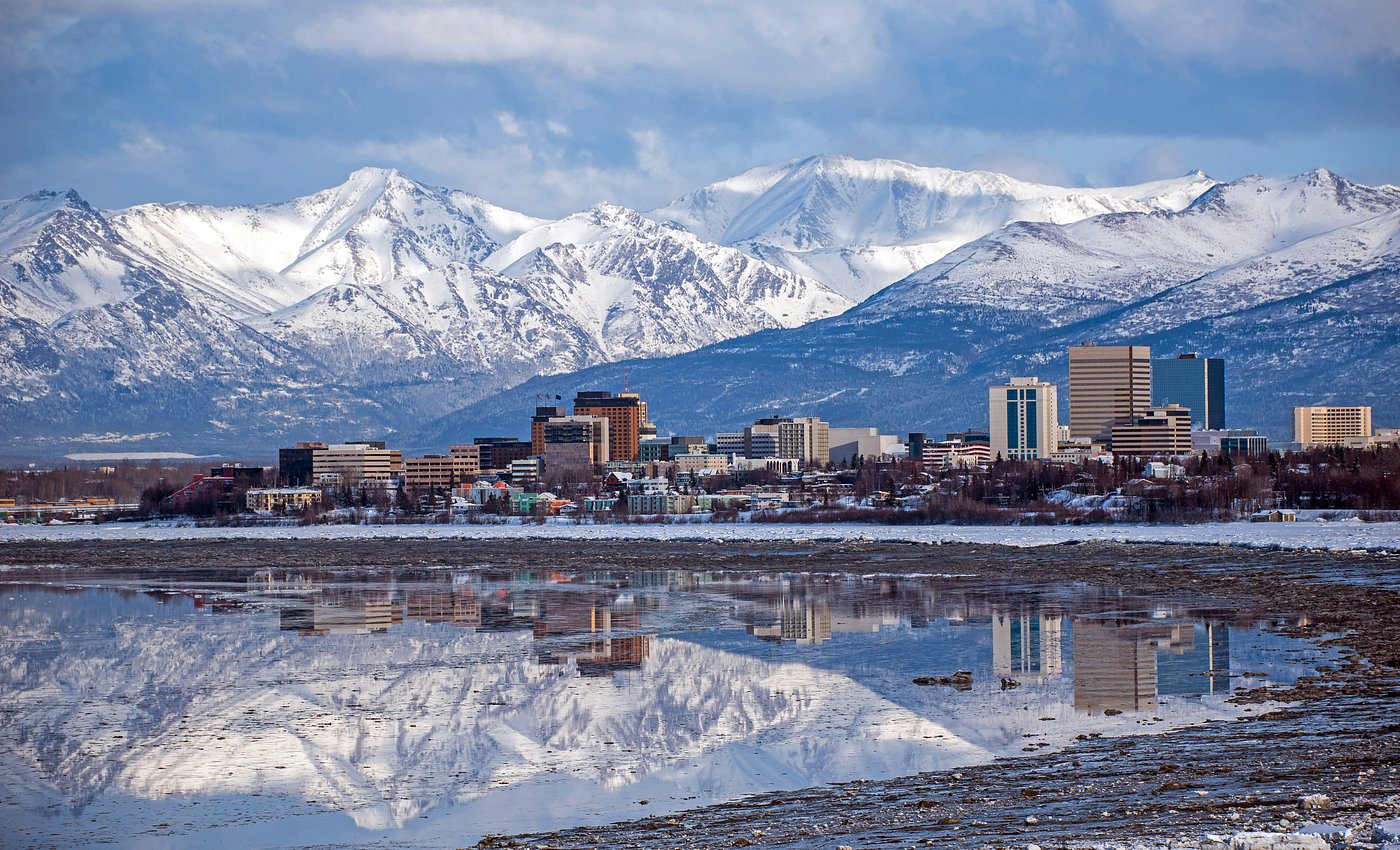
On October 18, 1867, a ceremony in Sitka, Alaska, marked a major change in the history of North America. Russian officials lowered their country’s flag and the American flag was raised, symbolising the formal transfer of Alaska from Russia to the United States.
The United States had agreed to purchase the vast territory for $7.2 million, under an agreement negotiated by US Secretary of State William H. Seward and Russian representatives. At the time, many Americans questioned why their government would spend money on a distant, cold region that appeared to offer little immediate economic value.
The deal was ridiculed as “Seward’s Folly” and “Seward’s Icebox”. But history would give the purchase a very different reputation. Alaska later became important for its natural resources, strategic location and role in North American defence.
The story is more than a land deal. It shows how governments sometimes make decisions based on long-term strategic interests rather than what seems profitable at the time.
Why did Russia sell Alaska?
To understand the deal, it is necessary to look at Russia’s position in the 19th century.
Russia had established a presence in Alaska through fur trading and colonial settlements. But the territory was remote from the main centres of Russian power, expensive to administer and difficult to defend.
Russia had also suffered a major defeat in the Crimean War of 1853–1856. Its leaders worried that, in a future conflict with Britain, Alaska could be captured without Russia receiving any compensation.
Selling the territory to the United States offered Russia a way to obtain money while avoiding the risk of losing Alaska in a war. Russia also saw the United States as a useful counterweight to British influence in North America.
The sale was therefore not simply about Russia giving away a frozen wilderness. It was a strategic decision shaped by geography, defence and international rivalry.
How did William Seward convince America to buy it?
William H. Seward, who served as US Secretary of State under Presidents Abraham Lincoln and Andrew Johnson, believed that expanding American territory could strengthen the country’s commercial and strategic position.
He saw Alaska as an opportunity to extend American influence across the North Pacific and improve access to trade routes connecting North America with Asia.
On March 30, 1867, Seward and Russian diplomat Edouard de Stoeckl agreed on a purchase price of $7.2 million. The US Senate approved the treaty in April, President Andrew Johnson signed it in May, and the formal transfer took place in Sitka on October 18.
The transfer ceremony was not the same as the payment date: the US Treasury issued the payment warrant on August 1, 1868.
Why was the deal called “Seward’s Folly”?
Many Americans thought the purchase was a waste of public money. Alaska was far away, had a harsh climate and was poorly understood by most people living in the eastern United States.
Critics questioned why the government would spend millions of dollars on a territory that seemed to offer little immediate economic benefit. Some called it “Seward’s Folly” or “Seward’s Icebox”.
But the discovery of gold in the wider northern region during the late 19th century changed perceptions. The Klondike Gold Rush began in 1896 in Canada’s Yukon territory, and Alaska became an important route for people travelling to the goldfields. Gold discoveries within Alaska itself also helped demonstrate its economic potential.
Later, Alaska’s natural resources and strategic position made it increasingly valuable to the United States.
What did the United States gain?
The purchase gave the United States approximately 586,000 square miles of territory—nearly 1.5 million square kilometres. The price worked out to less than two US cents per acre.
Over time, Alaska became important for several reasons:
-Natural resources: Alaska holds substantial oil, natural gas, mineral and fishery resources.
-Strategic location: It lies close to Russia across the Bering Strait and occupies a key position in the Arctic and North Pacific.
-Military importance: Alaska became strategically significant during the Second World War and later the Cold War.
- Economic opportunities: Mining, fishing, energy production and tourism became important parts of its economy.
Alaska did not immediately become a prosperous state after the purchase. For decades, its administration and economic development remained limited. The long-term value of the territory emerged gradually, rather than overnight.
What about Alaska’s Indigenous peoples?
The story of the Alaska Purchase is incomplete without considering the people who already lived there.
Alaska was home to Indigenous peoples, including Iñupiat, Yup'ik, Unangan (Aleut), Tlingit, Haida and Tsimshian communities, long before Russian or American control. These communities had their own languages, traditions, systems of governance and relationships with the land and sea.
The 1867 agreement was negotiated between the Russian and American governments. Indigenous communities were not equal participants in that diplomatic decision, even though the transfer affected their homelands and future political status.
American rule brought major changes to Indigenous communities, including pressure on traditional ways of life, disputes over land and resources, and policies that affected education, culture and self-government. Alaska’s history therefore includes both the expansion of American territory and the consequences of colonial rule for its original inhabitants.
When did Alaska become a US state?
Alaska did not become a state immediately after the 1867 purchase. It passed through different forms of US administration before becoming an organised territory in 1912.
It was formally admitted as the 49th US state on January 3, 1959. Its statehood came more than 90 years after the transfer from Russia.
Today, Alaska remains the largest US state by area. Its position near Russia and the Arctic continues to make it important to American security, energy policy and international relations.
The larger lesson from the Alaska Purchase
The Alaska Purchase shows that a government’s decision can look unwise in the short term but prove significant over many decades. Seward’s opponents focused on the immediate cost and the territory’s harsh conditions. He focused on future trade, territory and strategic influence.
However, the deal should not be judged only by its eventual economic value. It also represented a transfer of control over lands where Indigenous communities had lived for generations.
The bottom line: On October 18, 1867, the United States formally took possession of Alaska after agreeing to pay Russia $7.2 million. What critics called “Seward’s Folly” later became a major strategic and economic acquisition—but its history also reflects the complicated consequences of colonial expansion.



Reader comments (0)
No comments yet. Be the first.