CJP Leaders Detained Inside Delhi-Bound Plane, Phones Seized; Police Take Them to Separate Locations
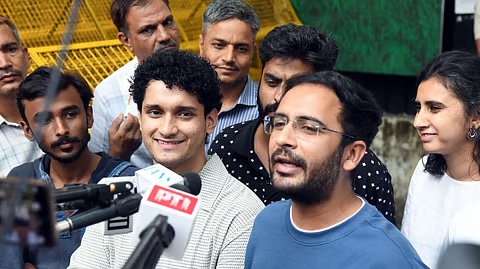
Cockroach Janta Party leaders Abhijeet Dipke, Saurav Das and Ashutosh Ranka were detained aboard their aircraft after it landed at Delhi airport on October 10, ahead of their planned Jantar Mantar protest, as police reported detaining around 300 people across the capital.

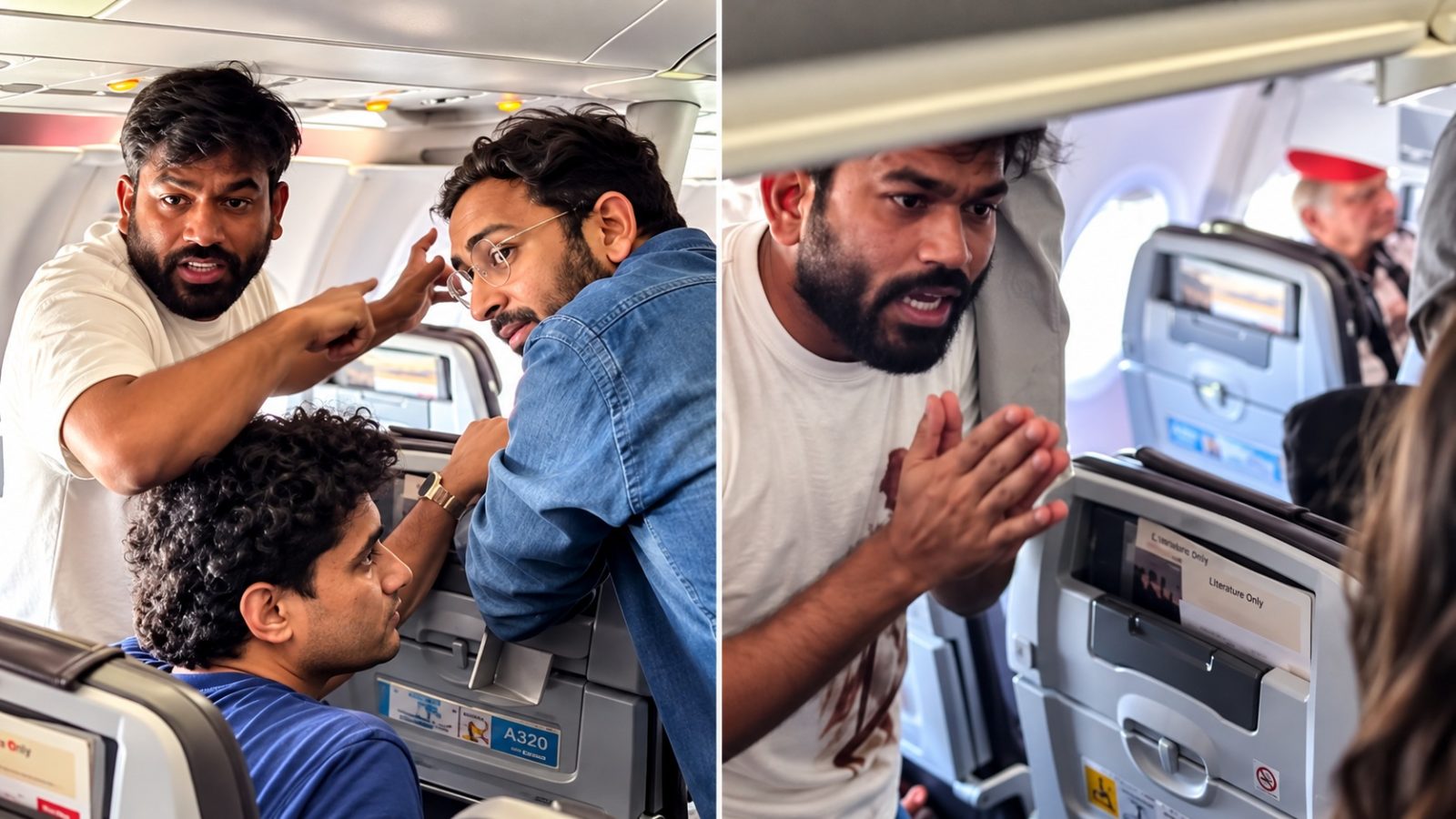
The Delhi Police detained three senior leaders of the Cockroach Janta Party (CJP) inside an aircraft at Indira Gandhi International Airport on Saturday, October 10, ahead of the party's planned protest at Jantar Mantar.
The leaders were founder Abhijeet Dipke, co-convenor Saurav Das and spokesperson Ashutosh Ranka. They had travelled from Mumbai to Delhi to participate in the demonstration demanding the resignation of Chief Election Commissioner (CEC) Gyanesh Kumar.
According to media reports, police personnel entered the aircraft shortly after it landed and took the three leaders into custody before they could leave the plane.
Videos shared by CJP showed the leaders raising slogans of “Inquilab Zindabad” as police approached them. Dipke was heard telling the officers that the group had come to Delhi prepared to be arrested.
The detention took place amid heightened security across the national capital, where police had denied permission for the proposed CJP demonstration at Jantar Mantar.
Who Are the Three CJP Leaders?
The three detained leaders hold prominent positions within the organisation.
Abhijeet Dipke: Founder and leading face of the Cockroach Janta Party.
Saurav Das: CJP co-convenor and spokesperson.
Ashutosh Ranka: CJP spokesperson and one of the group's key organisers.
They had travelled to Delhi to take part in the protest over alleged irregularities in the Election Commission's Special Intensive Revision (SIR) of electoral rolls.
The party has accused the authorities of preventing its leaders from reaching the protest venue and has demanded their release.
Phones and Electronic Devices Reportedly Seized
According to reports published by Dainik Jagran on October 10, the police also seized the three leaders' mobile phones and other electronic devices during the detention.
The reported seizure is significant because mobile phones are often used by protest organisers to communicate with supporters, share updates and publish videos from demonstrations.
However, the available reports do not establish the precise legal grounds for the reported seizure or whether the devices were formally taken as part of an investigation. Those details would need confirmation from the police or official records.
Police Took the Three Leaders to Different Locations
Reports said the three leaders were taken to separate locations after being detained.
According to the account published by Dainik Jagran, Dipke was taken towards Gurugram, while Das and Ranka were taken to different locations in Delhi, including Jaffarpur Kalan and outer Delhi.
The reported purpose was to prevent supporters from gathering in large numbers at a single location.
Details about the leaders' exact whereabouts varied across early reports. The police had not provided a complete public account of the legal grounds for each detention in the reports reviewed for this article.
The detention of the three leaders before they could reach Jantar Mantar meant that the party's principal organisers were unable to lead the planned demonstration at the venue.
Delhi Police Says Around 300 People Were Detained
The action against the CJP leaders was part of a wider security operation ahead of the proposed protest.
According to Dainik Jagran, Delhi Police said around 300 people had been detained across the capital by the time of its report.
The police also claimed that fewer than 1% of those detained were students and described the group largely as political workers and labourers. These figures and descriptions were attributed to the police and were not independently verified in the available reporting.
Police Commissioner Anurag Kumar said the law-and-order situation in Delhi remained under control and that no major incident involving violence or clashes had been reported at that point.
The distinction is important: a detention figure describes police action, not the number of people who committed an offence. Whether individual detentions were legally justified depends on the circumstances and the legal grounds involved.
Why Did Delhi Police Stop the Protest?
CJP had called for a demonstration at Jantar Mantar on October 10 to demand CEC Gyanesh Kumar's resignation.
Delhi Police had refused permission for the proposed gathering, citing procedural concerns and law-and-order considerations. Authorities subsequently introduced extensive security arrangements around central Delhi and other sensitive locations.
These measures included barricades, additional police and paramilitary deployment, restrictions on movement and preparations for detaining people attempting to join an unauthorised gathering.
Police said the arrangements were intended to maintain public order and prevent a repeat of problems associated with earlier demonstrations.
CJP, meanwhile, criticised the detentions and argued that its leaders were being prevented from exercising their right to protest.
The competing positions raise an important question: how should authorities manage a proposed demonstration when permission has been refused while also protecting the right to peaceful expression?
The answer depends on the applicable law, the reasons for the restrictions and the circumstances of each detention.
What Is the SIR Controversy About?
The protest centres on the Election Commission's Special Intensive Revision, or SIR, of electoral rolls.
An electoral roll is the official list of people registered to vote. A revision process is intended to check the accuracy of these lists, update voter information and identify duplicate or ineligible entries.
CJP and other protesters have alleged that the process risks removing the names of eligible voters. They have called for greater accountability from the Election Commission and demanded that CEC Gyanesh Kumar resign.
The Election Commission's stated purpose in reviewing voter lists is to maintain accurate electoral records. Allegations of wrongful deletion, however, need to be examined through official data, individual cases and the procedures available to voters who challenge errors.
A concern that eligible voters could lose their place on the electoral roll is not, by itself, proof that large-scale wrongful deletion has occurred. Equally, a revision process must provide clear ways for eligible voters to check their registration and correct mistakes.
For ordinary citizens, the practical step is to verify their voter details through the Election Commission's official services and follow the prescribed process if any correction is required.
The Bigger Picture: Security Measures and the Right to Protest
The detention of the three CJP leaders inside an aircraft brought the dispute over the planned Jantar Mantar demonstration into sharp focus.
The incident raises questions about the way police manage people arriving to participate in a protest, the legal basis for preventive detention and the seizure of personal electronic devices.
The police have cited the need to maintain law and order, while CJP has condemned the action and argued that its leaders were being stopped from reaching the protest venue.
India's Constitution protects freedom of speech and peaceful assembly, subject to reasonable restrictions permitted by law. Authorities can regulate demonstrations to protect public order, but the legality of a particular restriction or detention depends on its legal basis and how it is applied.
The reported detention of around 300 people should also be understood in context. It reflects the scale of the preventive action described by police, but does not establish that every person detained had committed an offence.
The takeaway: The detention of Dipke, Das and Ranka prevented three key CJP organisers from reaching their planned protest. The wider issue now is whether the police action and restrictions were justified under the law, while the dispute over electoral-roll revision continues.
- The Indian Express — “CJP leaders Abhijeet Dipke, Saurav Das and Ashutosh Ranka detained after landing in Delhi ahead of protest,” October 10, 2026.
- Hindustan Times — “Abhijeet Dipke, Saurav Das and Ashutosh Ranka detained on landing at Delhi airport for CJP's stir,” October 10, 2026.
- Dainik Jagran — “Saurabh, Dipke and Ashutosh detained; phones seized as police seek to stop Jantar Mantar protest,” October 10, 2026.
- NDTV — “Abhijeet Dipke Detained From Plane At Delhi Airport Ahead Of CJP's Jantar Mantar Protest,” October 10, 2026.
- India Today — “Delhi Police gears up for CJP protest with 25,000 personnel, 300 cameras, 12 detention centres,” October 9, 2026.
Report a mistake
Related stories
SC Notice to Centre on Privacy Law as News Publishers Warn It Could Shut Newsrooms
K Annamalai Questions Centre Over CJP Protest Crackdown, Jantar Mantar Ban and Police Action
CJP Leaders Withdraw Delhi High Court Plea Challenging Judicial Custody
Reader comments (0)
No comments yet. Be the first.