Jantar Mantar Protest: Jan Suraaj Says Government Is on the Back Foot Over Gyanesh Kumar Row
Ahead of the October 10 CJP protest at Jantar Mantar, Jan Suraaj has backed the demand for Chief Election Commissioner Gyanesh Kumar’s resignation, while Delhi Police has denied

The political temperature in Delhi is rising ahead of a proposed protest at Jantar Mantar on October 10 by the Cockroach Janta Party (CJP) and several student organisations. The protest is focused on the demand for the resignation of Chief Election Commissioner Gyanesh Kumar and concerns surrounding the Election Commission's handling of the Special Intensive Revision (SIR) of electoral rolls
The latest political reaction has come from Jan Suraaj, which has backed the demand for Kumar's resignation.
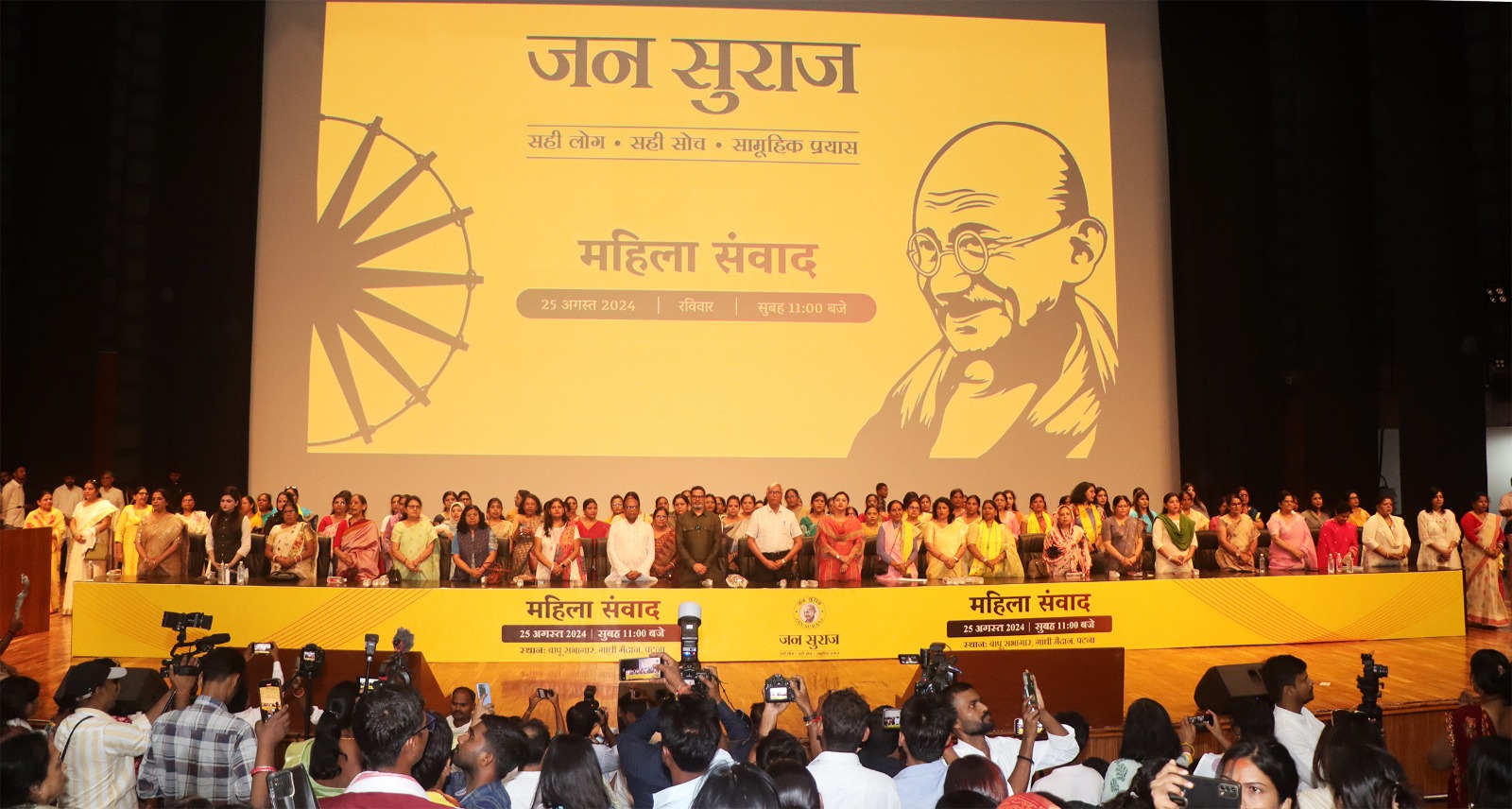
Jan Suraaj national spokesperson Kumar Saurabh Singh said that stopping a peaceful protest goes against democratic values and alleged that the government is under pressure because of the growing campaign against the Chief Election Commissioner.
These are political allegations by Jan Suraaj and should be understood in that context. The government and the Election Commission have faced strong criticism from opposition parties and protest groups over the SIR issue, while authorities have defended the electoral process and cited public-order concerns behind restrictions on demonstrations.
Why is the CJP planning a protest?
The Cockroach Janta Party has announced a major youth protest at Jantar Mantar on Saturday, October 10. The principal demand is the resignation of CEC Gyanesh Kumar.
CJP and student groups including AISA, SFI and AISF have announced a joint agitation, linking the protest to electoral reforms and concerns over the SIR process.
CJP co-convener Saurav Das formally informed Delhi Police about the planned demonstration on October 7. However, the police subsequently denied permission.
The disagreement has now become part of the larger political debate: where should the line be drawn between maintaining public order and allowing peaceful political protest?
Jan Suraaj backs the demand for resignation
Jan Suraaj spokesperson Kumar Saurabh Singh has strongly supported the demand for Kumar's resignation. According to his statement, the government is “on the back foot” because of the continuing protests and public debate surrounding the Election Commission. He also argued that peaceful demonstrations should not be stopped in a manner that violates constitutional rights.
Jan Suraaj had already demanded Kumar's resignation in September, with the party raising questions about his appointment process and seeking his resignation on what it described as grounds of moral responsibility.
The party's latest intervention therefore comes as part of a continuing political position rather than a completely new demand.
What is the dispute over Gyanesh Kumar about?
The controversy is closely connected to the Special Intensive Revision, or SIR, of electoral rolls. The Election Commission has been carrying out voter-list revision, while opposition parties and several political groups have raised concerns about the manner in which the exercise is being conducted.
The controversy intensified after reports that Election Commissioners Sukhbir Singh Sandhu and Vivek Joshi had raised objections over a number of decisions connected with the SIR process. Petitions were subsequently filed before the Supreme Court challenging aspects of the Election Commission's functioning.
This has transformed what was initially an administrative and electoral issue into a major political controversy.
What has the Supreme Court said?
This part of the story requires particular care because political statements have sometimes gone further than what the court has actually decided. On October 5, the Supreme Court did not suspend Gyanesh Kumar.
A bench headed by Chief Justice Surya Kant issued notices to the Center, the Election Commission and other respondents and sought relevant records. The court said it would examine whether the decisions being challenged were consistent with the law.
The court also made an important point: it could not take action against a constitutional authority simply on the basis of media reports or unverified allegations.
At the same time, the court indicated that if the records ultimately showed that decisions had been taken contrary to the statutory requirements, appropriate action could follow.
Therefore, it would be incorrect to say that the Supreme Court has ordered or demanded the resignation of the Chief Election Commissioner.
The matter remains under judicial examination.
Why is the protest permission issue important?
Jantar Mantar is a designated area for demonstrations, but protests there are subject to rules and police regulation. Delhi Police has said that demonstrations at Jantar Mantar require prior permission and that the gathering is subject to a prescribed limit. Police reiterated that organisers are expected to seek permission in advance.
CJP, however, has challenged the approach of requiring permission, arguing that it had formally informed the police about its planned demonstration and that citizens should be able to protest peacefully.
This disagreement has created a second issue alongside the demand for Kumar's resignation:
Can citizens hold a peaceful protest when the police have refused permission?
The answer involves balancing two democratic principles — the right to peaceful expression and assembly, and the state's responsibility to maintain public order.
CJP says it will go ahead
Despite the denial of permission, CJP leaders have said they intend to proceed with the October 10 protest.
CJP co-convener Ashutosh Ranka told The Indian Express that the organisation planned to march to Jantar Mantar even if authorities did not grant permission. CJP founder Abhijeet Dipke has also publicly called on supporters to participate. This has prompted Delhi Police to prepare for a potentially large gathering.
Recent reports indicate that authorities have increased security in central Delhi, while restrictions have been imposed around areas where large demonstrations could take place.
Why is Delhi seeing heavy security?
The October 10 protest comes after several days of demonstrations by opposition parties and youth groups over the Election Commission and SIR.
Opposition leaders, including Rahul Gandhi and Priyanka Gandhi Vadra, have been detained during recent protests after attempting to move towards restricted areas. Authorities have said their actions are related to security and public-order requirements. Opposition parties, meanwhile, have described the restrictions as an attempt to suppress dissent. The disagreement is therefore no longer limited to the question of electoral rolls.
It has developed into a broader political confrontation over democratic rights, the independence of electoral institutions and the government's handling of public protests.
Jan Suraaj's 'Emergency-like situation' claim
Jan Suraaj has described the heavy security deployment in Delhi as creating an atmosphere similar to an “Emergency”. That is a political comparison, not a legal finding.
India's Emergency of 1975-77 involved extraordinary constitutional measures, including the suspension of several fundamental rights. The current situation should therefore not be equated with the 1975 Emergency merely because there are restrictions on particular demonstrations. However, the comparison shows how politically sensitive the present situation has become.
For opposition parties and protest groups, restrictions on demonstrations are being presented as evidence of shrinking democratic space. For authorities, the same restrictions are being justified as measures required to prevent disorder and maintain public safety.
Can the government simply remove the CEC? Another important question is whether a street protest can directly force a Chief Election Commissioner out of office.
The answer is more complicated.
The Chief Election Commissioner is a constitutional authority, and removal is governed by a specific constitutional procedure. A protest can create political pressure, but it does not itself remove the CEC from office. This distinction matters because political slogans such as “Gyanesh Kumar must resign” express a demand, but the legal mechanism for removing a CEC is separate.
Therefore, even if thousands of people gather at Jantar Mantar, the protest itself does not automatically remove the Chief Election Commissioner.
Why this protest matters beyond the CJP The CJP started as an unusual youth-led political movement, but its latest protest has brought it into a much wider political debate. Student organisations have joined the planned demonstration, while opposition parties have separately been protesting against the Election Commission.
This means October 10 could become an important test for the emerging youth movement.
The key questions will be:
How many people actually participate?
Will the protest remain peaceful?
Will police allow protesters to gather at or near the designated site?
Will opposition political leaders join the demonstration?
How will the government respond?
And will the movement continue after October 10?
These questions could determine whether the CJP remains primarily a youth protest platform or develops into a larger political organisation.
The larger democratic question
At the heart of the controversy is a basic democratic principle. Citizens must have the ability to question institutions and governments. At the same time, protests must remain peaceful and within the law. The government has a responsibility to maintain public order, but the use of restrictions also needs to be proportionate.
The Supreme Court's current proceedings provide another institutional channel for resolving some of the allegations surrounding the Election Commission. That is important because political protest and judicial scrutiny can operate at the same time.
What happens on October 10?
For now, the CJP says it will proceed with its planned demonstration despite the denial of permission. Delhi Police is preparing for the possibility of a large gathering, while opposition groups and student organisations are watching the situation closely.
Jan Suraaj has added its political voice to the demand for Gyanesh Kumar's resignation. But whether the protest becomes a major national political moment will depend not only on the number of people who reach Delhi, but also on what happens on the ground.
The most important test will be simple: Can a highly charged political protest remain peaceful while the authorities maintain public order without unnecessarily suppressing democratic dissent?
That is the question India will be watching on October 10.
- Reuters — Latest reporting on the CJP protest, detentions and demands for CEC Gyanesh Kumar's resignation.
- The Indian Express — CJP and student organisations' October 10 Jantar Mantar protest.
- Times of India — Delhi Police's denial of permission for the October 10 demonstration.
- India Today — Delhi Police rules on demonstrations at Jantar Mantar.
- Supreme Court proceedings on petitions concerning CEC Gyanesh Kumar and SIR.
- ABP News — Jan Suraaj's earlier demand for Gyanesh Kumar's resignation.
- Economic Times — CJP and student groups joining hands for the October 10 protest.
Report a mistake
Related stories
India Bloc Rally at Ramlila Maidan Today: Can Opposition Turn Its Campaign Against Election Commission into Mass Support?
Diljit Dosanjh Responds to Critics: “Don’t Teach Punjabis How to Fight”
Kharge Calls for November 1 Rally to ‘Save Votes, Save the Nation’
Reader comments (0)
No comments yet. Be the first.