Lucknow Floods: Heavy Rain Upstream and Floodplain Encroachment Put Gomti River at Centre of Crisis
Lucknow’s severe flooding followed exceptionally heavy rainfall in the Gomti’s upper catchment, while construction in low-lying areas and pressure on drainage systems increased the damage to homes and public infrastructure.

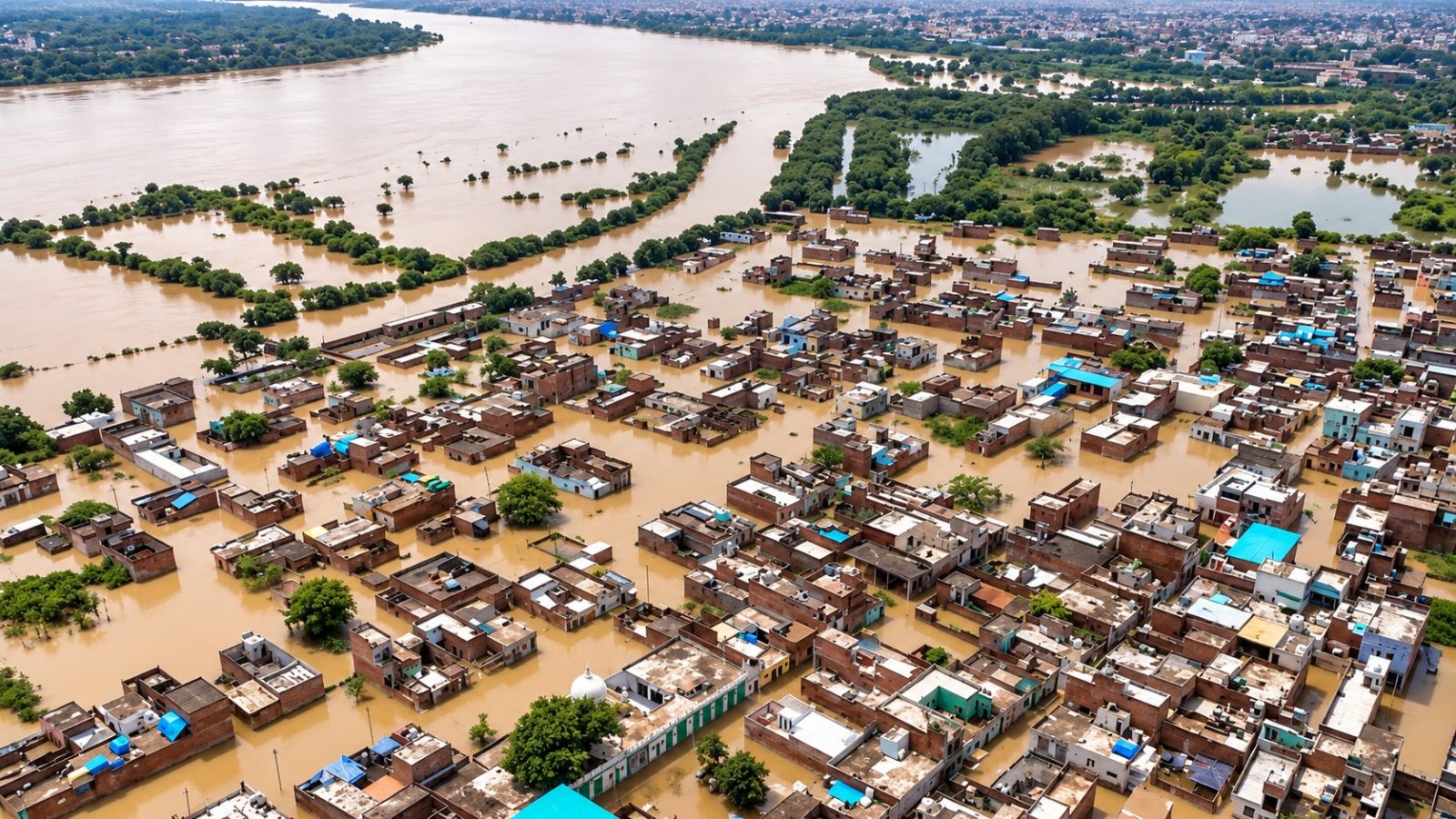
Lucknow has faced severe flooding as the Gomti River rose and overflowed into residential areas, including Faizullaganj, Bakshi Ka Talab and parts of Gomti Nagar Extension.
The main trigger was heavy rainfall in districts upstream of Lucknow during the last week of September. The Indian Express reported that Pilibhit, Shahjahanpur, Lakhimpur Kheri and Sitapur received exceptionally heavy rain between September 22 and 27.
Water from these areas entered the Gomti and its tributaries, travelling downstream towards Lucknow. This explains why the river continued rising even after rainfall in the city had eased.
The Gomti reached 108.14 metres at Hanuman Setu, crossing the reported danger level. The flood showed how rainfall hundreds of kilometres away can affect a city days later.
Did Construction on the Floodplain Make the Situation Worse?
Heavy rainfall triggered the flood, but the way a city is built can determine how much damage it suffers.
Floodplains are low-lying areas beside rivers where water naturally spreads during high flows. Wetlands and open land can store some floodwater and slow its movement. When these areas are built over or blocked, the river has less space to spread safely.
Environmental concerns about construction in low-lying areas around the Gomti have therefore returned to the centre of the debate. Residents in parts of Faizullaganj and other affected neighbourhoods have seen water enter homes, streets and essential facilities.
However, the precise contribution of illegal construction to this particular flood requires a detailed assessment of land use, floodplain boundaries and drainage infrastructure. It would be incorrect to attribute the entire disaster to encroachment alone.
Why Could the City's Drainage System Not Prevent the Flood?
Urban drains are designed mainly to remove rainwater from streets and built-up areas. They cannot, on their own, prevent flooding when a river rises above its banks.
When the Gomti's level becomes high, water may also struggle to flow out through drainage outlets. In some locations, this can contribute to backflow and prolonged waterlogging.
The combination of high river levels, low-lying settlements and limited drainage capacity can leave homes submerged long after local rain has stopped.
How Unusual Is This Flood?
Reports have described the current flooding as the worst in Lucknow in nearly two decades, with comparisons to the major floods of 2008. The submergence of the Gomti Riverfront has also prompted comparisons with earlier high-water events.
Historical comparisons need care: a river reaching a particular level, a riverfront being submerged and homes being flooded are different measures. The claim that the present event matches a specific flood from 1982 should be verified against official river records before being treated as established fact.
The reported number of affected homes has also varied across news reports. Some have cited around 40,000 homes affected across several localities, while other reports have counted smaller numbers of severely affected houses or families. These figures may reflect different areas and definitions, rather than one confirmed final total.
What Must Change Before the Next Monsoon?
The flood raises three practical questions for the authorities:
Protect floodplains: Map vulnerable river areas, enforce construction rules and prevent new encroachment in natural flood-storage zones.
Improve drainage: Check whether drains, pumping stations and outlets can function when the river is already high.
Plan for upstream rainfall: Use river gauges and rainfall forecasts to provide early warnings to downstream neighbourhoods.
Uttar Pradesh Chief Minister Yogi Adityanath has directed officials to prepare an embankment plan from Faizullaganj towards Naimisharanya. Such infrastructure may protect selected areas, but embankments alone cannot replace floodplain protection, drainage improvements and early-warning systems.
The takeaway: Heavy upstream rainfall triggered Lucknow’s flood, while development patterns and drainage limitations may have increased its impact. The long-term answer is not just to remove water after a disaster, but to give the river adequate space and prepare the city for future high-water events.
- The Indian Express — Lucknow flooded, 40,000 homes hit: Trouble began hundreds of kilometres upstream
- The Indian Express — ‘How can we leave our home?’: Families face severe flooding
- Hindustan Times — Rain has stopped, but the Gomti continues to flood Faizullaganj
- The Times of India — Gomti flood prompts plan for an embankment from Faizullaganj to Naimish
- The Times of India — Flooding disrupts life along the Gomti

Reader comments (0)
No comments yet. Be the first.