Section 163 in Force in New Delhi Ahead of CJP Protest: Police Tighten Security and Detain Supporters
Delhi Police has tightened security and denied permission for the Cockroach Janta Party’s October 10 protest at Jantar Mantar, citing restrictions under Section 163 of the Bharatiya Nagarik Suraksha Sanhita and concerns over public order.

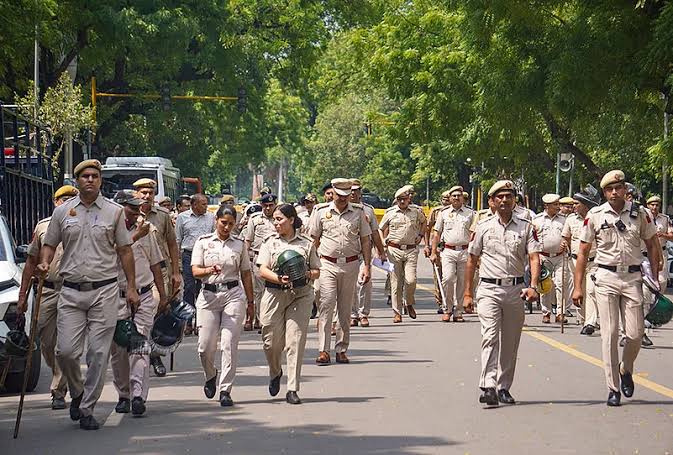
New Delhi is under heightened security ahead of the proposed October 10 protest by the Cockroach Janta Party (CJP) at Jantar Mantar. Delhi Police has denied permission for the demonstration, imposed restrictions on public gatherings in the New Delhi district and begun detaining political leaders and supporters as a preventive measure.
The protest has been announced to demand the resignation of Chief Election Commissioner (CEC) Gyanesh Kumar, amid a wider political dispute over the Special Intensive Revision (SIR) of electoral rolls.
According to a report published by Dainik Jagran on October 9, police have made extensive security arrangements and said that CJP and Aam Aadmi Party (AAP) leaders and supporters will not be allowed to hold demonstrations in the New Delhi district. Police have also confirmed detentions reported by CJP representatives and AAP leader Saurabh Bharadwaj.
The situation has raised questions about public order, the right to peaceful protest and the way authorities are managing a politically sensitive demonstration.
Why has Delhi Police tightened security?
The immediate reason is the CJP's plan to organise a protest at Jantar Mantar on October 10.
According to Delhi Police, CJP leader Saurav Das submitted a letter on October 7 informing the authorities about the proposed demonstration. Police said that permission applications for protests at Jantar Mantar must be submitted at least 10 days in advance.
Officials also said that previous protest organisers had not followed all the prescribed conditions, which contributed to the decision to refuse permission for the latest demonstration.
CJP, meanwhile, has maintained that it informed the police about its plans and has questioned why permission is required for a peaceful protest at a designated demonstration site.
The disagreement has now become part of the larger political debate surrounding the planned gathering.
What is Section 163, and why has it been imposed?
Delhi Police has invoked Section 163 of the Bharatiya Nagarik Suraksha Sanhita (BNSS), 2023.
In simple terms, this provision allows an authorised magistrate to issue urgent orders to prevent potential danger, public disturbance or threats to public safety. Depending on the order, it can restrict certain gatherings and activities for a specified period.
It is important to distinguish this provision from Section 144 of the old Code of Criminal Procedure. Section 163 BNSS is the corresponding provision under the newer criminal procedure law.
Delhi Police officials have warned that gatherings in violation of the restrictions could lead to legal action. Deputy Commissioner of Police Shrishti Pandey urged people not to participate in unauthorised demonstrations and warned of possible legal consequences.
However, Section 163 does not automatically ban every protest across India. Its application depends on the specific order, the area covered and the restrictions imposed by the competent authority.
In this case, the restrictions reported by police apply to the New Delhi area and the proposed demonstration.
Police begin detaining leaders and supporters
According to Dainik Jagran, police began taking political leaders and active supporters into preventive custody on Thursday night, October 8. The reported action covered several parts of Delhi, including the three districts across the Yamuna, South Delhi, South-East Delhi and Outer North Delhi.
CJP leader Saurav Das and AAP leader Saurabh Bharadwaj posted on X that their supporters had been detained. The newspaper reported that Delhi Police confirmed the detentions. CJP has also made broader claims about large numbers of people being detained in different parts of the country. Those wider figures should be treated as claims by the organisation unless independently verified.
Preventive detention and other police measures must operate within the applicable law. The exact legal basis and circumstances of each detention matter when assessing whether the action was justified.
Police reach out to local communities
The security preparations are not limited to barricades and police deployment. According to the Times of India, police teams have contacted market associations, resident welfare associations and Aman Committees, asking them to discourage activities that could disturb public order. Police have also reportedly been monitoring hotels and transport points for possible mobilisation ahead of the protest.
Dainik Jagran has separately reported that local police stations were instructed to meet people in their areas, including at religious places, and advise them not to travel to Jantar Mantar for unauthorised demonstrations. These steps form part of the police effort to prevent a large gathering from developing while restrictions remain in force.
At the same time, outreach to communities should be carried out fairly and without targeting people simply because of their religion, neighbourhood or political association. Any police action must be based on lawful grounds and specific circumstances.
What changes should Delhi residents expect on October 10?
The proposed protest has also led to measures that could affect ordinary residents and travellers.
According to the Times of India, retail liquor outlets across Delhi are scheduled to remain closed on October 9 and 10 under an order issued by the Excise Department. Licensed restaurants, bars and clubs are expected to continue operating under their existing permissions.
Indian Railways has also ordered the cancellation of certain Mail and Express trains scheduled to arrive at New Delhi and Hazrat Nizamuddin stations between 4 am and 2 pm on October 10. The report says the decision was taken amid the possibility of serious traffic congestion around the stations; officials had not confirmed whether the cancellations were directly linked to the protest.
Passengers should check their train status before travelling and follow official traffic and police advisories.
Why is the CJP demanding Gyanesh Kumar's resignation?
The planned demonstration is part of a broader political campaign against the Election Commission's handling of the SIR process.
The Election Commission's voter-list revision exercise has faced criticism from opposition parties and protest groups, which have raised concerns about the treatment of voters and the possible exclusion of eligible names.
CJP and other organisations have linked their protest to these concerns and are demanding the CEC's resignation.
These are allegations and political demands, not proof by themselves that electoral manipulation has taken place. The claims must be examined through evidence, official records and the relevant legal process.
The dispute has nevertheless become a major political confrontation, with protests and counter-statements from the opposition and authorities.
Does denying permission mean peaceful protest is illegal?
This is one of the central questions in the current controversy. The Constitution protects the right to freedom of speech and peaceful assembly under Article 19, subject to constitutionally permitted restrictions. Authorities can regulate demonstrations to address public safety, traffic and law-and-order concerns.
Jantar Mantar is a designated protest location, but Delhi Police guidelines require advance permission and place limits on the size and conditions of gatherings. Police say the CJP application came too late and that the organisers did not meet the applicable requirements.
CJP, on the other hand, has questioned the denial of permission and indicated that it wants to proceed with the demonstration.
The legal position depends on the orders in force and the facts of the case. A refusal of permission does not remove the constitutional value of peaceful protest, but neither does the right to protest mean that every gathering can ignore a lawful restriction.
The important questions are whether the restrictions have a valid legal basis, whether they are applied proportionately and whether authorities respect the rights of citizens while maintaining public order.
What happens next? Delhi Police has warned that it will take action against unauthorised gatherings while Section 163 restrictions remain in force.
CJP has continued to call attention to the October 10 protest, while police are preparing to prevent an unauthorised gathering in New Delhi.
The immediate outcome will depend on whether organisers and supporters attempt to reach Jantar Mantar, how the authorities respond and whether the situation remains peaceful.
For the wider public, the issue extends beyond one organisation or one demonstration.
It raises a fundamental question for Indian democracy: how can the state maintain public order while ensuring that citizens retain a meaningful opportunity to express political disagreement peacefully?
The answer requires both sides to follow the law, clear communication from the authorities and scrutiny of any allegation of unlawful action.
- Dainik Jagran — Delhi Police preparations, Section 163 restrictions and preventive detentions ahead of the CJP protest.
- Times of India — Police requirements for protests at Jantar Mantar, including advance permission and gathering limits.
- Times of India — October 10 public-service updates, retail liquor closures and selected train cancellations.
- Public TV / ANI — Delhi Police warning about the proposed protest and possible legal action against unauthorised gatherings.
- The Indian Express — Reporting on the proposed CJP protest and police restrictions.
Report a mistake
Related stories
India Bloc Rally at Ramlila Maidan Today: Can Opposition Turn Its Campaign Against Election Commission into Mass Support?
SC Notice to Centre on Privacy Law as News Publishers Warn It Could Shut Newsrooms
Kharge Calls for November 1 Rally to ‘Save Votes, Save the Nation’

Reader comments (0)
No comments yet. Be the first.