Putin Proposes Summit With Trump and Xi on Ukraine War, but Kyiv May Be Left Out
Vladimir Putin has reportedly proposed talks with Donald Trump and Xi Jinping on the Ukraine war during the November APEC summit in China. The meeting is not confirmed, and Ukraine’s absence raises questions about any possible peace deal.

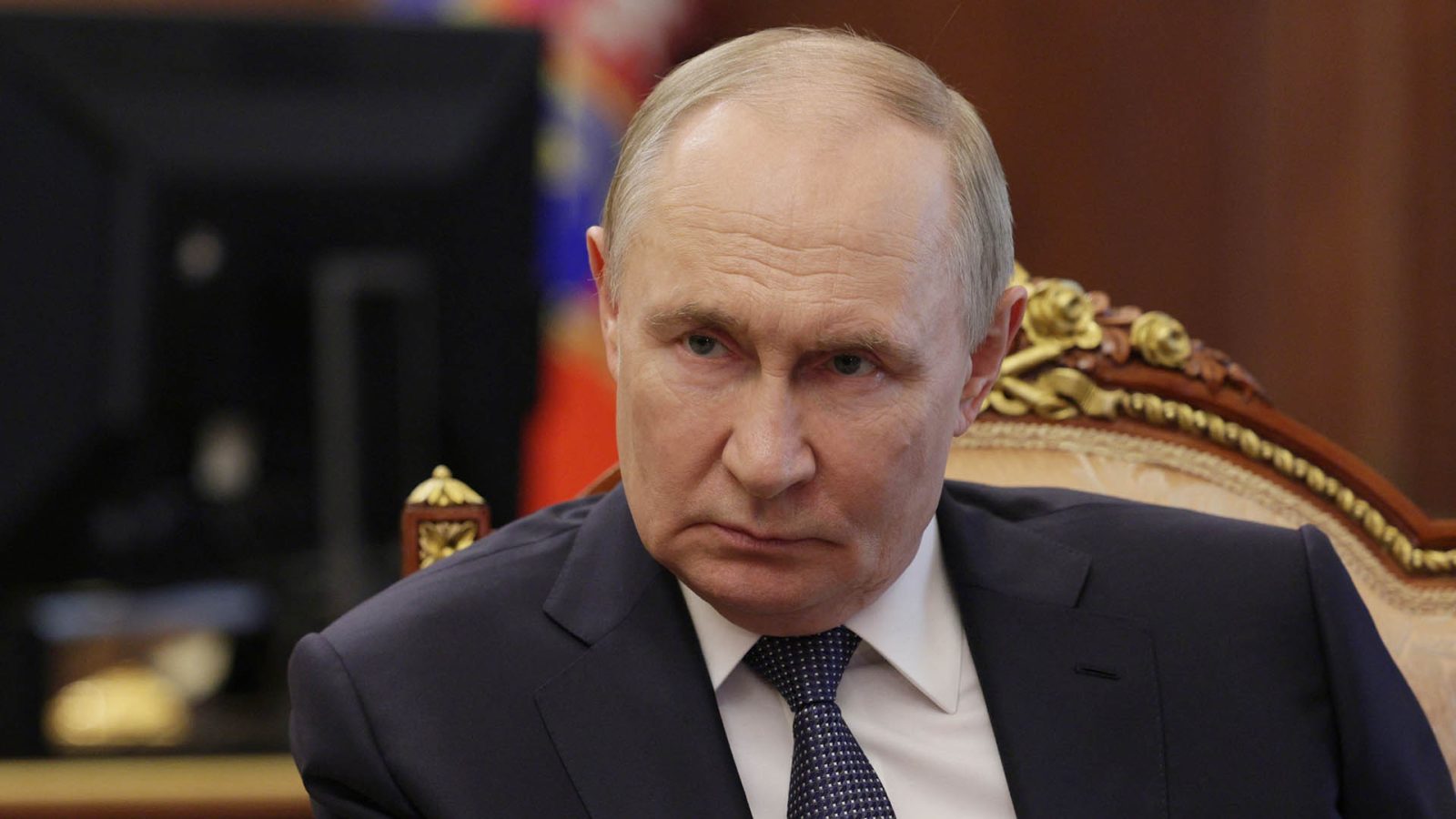
Russian President Vladimir Putin has reportedly proposed a meeting with US President Donald Trump and Chinese President Xi Jinping to discuss the war in Ukraine. According to The Wall Street Journal, the idea is to hold the talks next month, possibly alongside the Asia-Pacific Economic Cooperation (APEC) leaders’ meeting in Shenzhen, China.
The proposal is significant because it would bring three of the world’s most powerful leaders into one room to discuss a war that has reshaped European security and strained relations between Russia and Western countries.
But there is one major concern: Ukraine itself may not be represented at the proposed meeting. Ukrainian President Volodymyr Zelenskyy would not be among the three leaders named in the proposal, even though the war is taking place on Ukrainian territory and any settlement would directly affect Ukraine’s future.
The summit remains only a proposal. The Kremlin has said discussions about a possible meeting are taking place, but there is no final agreement on whether it will happen or what the leaders would discuss. A senior US official told the Wall Street Journal that Trump had not formally accepted the invitation, although he may be open to the idea.
Why is November being discussed?
The reported proposal is linked to the APEC Economic Leaders’ Meeting, scheduled for November 18–19, 2026, in Shenzhen, China. APEC brings together economies from across the Asia-Pacific region to discuss economic cooperation, trade and other shared issues.
According to the Wall Street Journal, Putin raised the idea during a telephone conversation with Trump on October 9. Russian diplomats reportedly discussed the proposal with Chinese officials, who indicated they would not object if Trump agreed to attend.
Holding a meeting alongside APEC could make it easier for the three leaders to meet without arranging a separate international summit. However, attending the same event would not automatically mean that a trilateral meeting had been agreed.
Kremlin spokesperson Dmitry Peskov said there was no clear understanding yet about the meeting or its agenda. In other words, the diplomatic door may be open, but no firm decision has been announced.
What does Putin want from a possible peace deal?
Russia has been seeking a settlement that reflects its demands and security claims. Ukraine, meanwhile, has insisted that any agreement must protect its sovereignty and cannot simply reward Russia for taking Ukrainian territory by force.
That is where the difficulty begins. A meeting between Putin, Trump and Xi could provide an opportunity to discuss a way forward, but the three leaders would not automatically agree on what peace should look like.
For Moscow, direct talks with the US president and China’s leader could raise Russia’s diplomatic standing and give it an opportunity to shape the terms of negotiations. For Trump, a summit could support his stated goal of ending the war. China could present itself as a participant in efforts to resolve a major international conflict.
But a deal discussed without Ukraine could face a serious problem: the people whose territory and security are at stake would have had no direct voice in shaping it. Even if the three leaders reached a political understanding, implementing it would be difficult without Ukraine’s participation and agreement.
Why is Ukraine’s absence such a big issue?
Imagine two countries negotiating the future of a third country without that country being present. Even if the intention is to end a war, the country left out may question whether the proposed terms protect its interests.
That is the central concern surrounding the reported proposal.
Ukraine wants its territorial integrity and long-term security protected. Russia has its own demands, including on territory and security arrangements. The United States has influence through its diplomatic and military relationship with Ukraine, while China maintains relations with Moscow and has called for a political settlement.
These interests do not always align. A peace agreement would need to address questions such as the future of occupied Ukrainian territory, security guarantees, military activity and the conditions under which fighting would stop.
The involvement of Trump and Xi could carry diplomatic weight, but neither leader can simply settle Ukraine’s future on its behalf. Without Kyiv’s participation, a proposed agreement could face rejection from Ukraine and criticism from European governments that support its sovereignty.
Trump says peace negotiations are making progress
Trump has defended his approach to negotiations with Moscow. In a post on Truth Social on Sunday, he said progress was being made towards ending the war and argued that he did not want to take steps that might push Russia away from the negotiating table.
He also criticised Zelenskyy, saying Ukraine had failed to secure a better deal earlier in the conflict. Trump’s remarks reflect his view that keeping communication open with Putin is necessary to reach an agreement.
However, saying that negotiations are making progress is not the same as announcing a peace deal. The key test will be whether the discussions produce terms that both Russia and Ukraine are prepared to accept and that can be implemented in practice.
What role does the Russian diesel deal play?
The proposed summit comes amid renewed discussion of energy cooperation between Moscow and Washington.
According to Russian presidential aide Yury Ushakov, Putin and Trump discussed economic initiatives, energy supplies and international issues during their October 9 phone call. Ushakov described the conversation as substantive and friendly.
After the call, Trump said Russia would release more than 300,000 tonnes of diesel fuel for US and international markets, with further shipments expected. The reported arrangement has drawn criticism because energy sales can provide Russia with revenue while the war continues.
The agreement also illustrates the practical pressures facing governments. The US wants to manage fuel costs and supply, while Russia has an interest in finding buyers for its energy products. Those economic interests can complicate efforts to isolate Moscow over the invasion of Ukraine.
Energy cooperation does not, by itself, prove that the two countries have reached an understanding over Ukraine. But it shows that negotiations about the war are taking place alongside wider discussions about trade, fuel and the relationship between the two governments.
Could China help bring the war to an end?
China’s participation could give any discussions greater international visibility. Beijing has maintained close ties with Moscow and has presented itself as supportive of a political solution to the conflict.
However, China would face a difficult balancing act. It would need to manage its relationship with Russia while dealing with Ukraine and European countries that are concerned about Moscow’s actions.
A meeting involving Putin, Trump and Xi could create an opportunity for discussion, but the presence of three powerful leaders does not guarantee an agreement. The outcome would depend on the terms discussed, the willingness of the parties to compromise and whether Ukraine is included in the process.
There is also a difference between agreeing on broad principles and negotiating the details of a settlement. Ending active fighting, deciding the future of disputed territory and providing security guarantees would require more than a single leaders’ meeting.
What happens next?
For now, the reported summit remains uncertain. The Kremlin has acknowledged that the possibility is being discussed, but neither a confirmed date nor an agreed agenda has been announced.
The next important developments will be whether Trump accepts the proposal, whether China formally supports the meeting and whether Ukraine is given a role in any talks.
The central question is not simply whether Putin, Trump and Xi will meet. It is whether their discussions can produce a peace process that addresses the concerns of the people directly involved in the war.
A summit could open a diplomatic door, but a lasting peace will be difficult to achieve if Ukraine is excluded from decisions about its own future.
Reader comments (0)
No comments yet. Be the first.