Trump’s White House Press Secretary Katie Zacharia Leaves After Just Five Days Amid Legal Credentials Controversy
Katie Zacharia is leaving her White House press secretary role after a troubled first briefing and questions over her legal credentials. Trump said he advised her to reconsider the job.

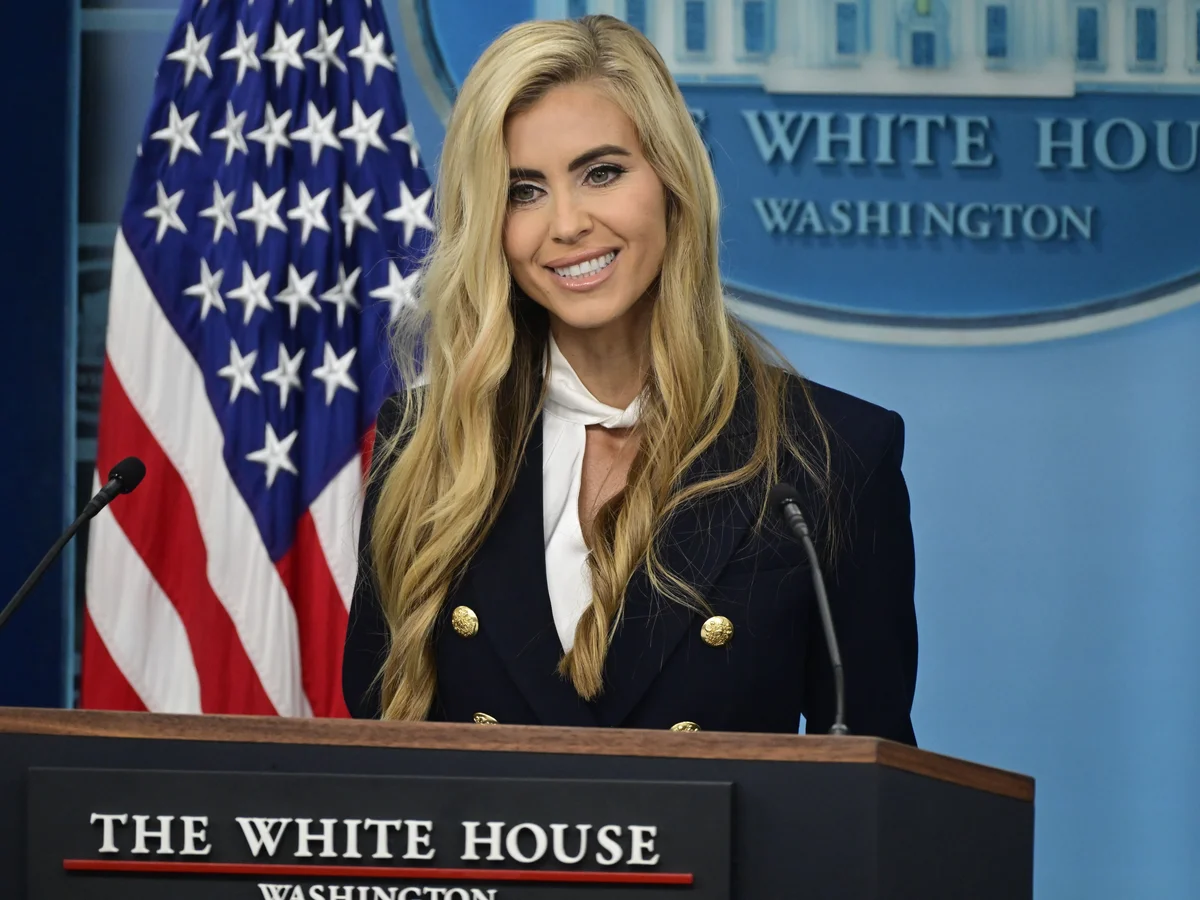
Katie Zacharia is leaving her position as White House press secretary just days after joining US President Donald Trump’s administration. Her departure follows criticism of her first press briefing and questions about her professional background, including her admission that she did not pass the US bar examination.
The development is significant because the White House press secretary is one of the most visible officials in the US government. The person in this role communicates the president’s decisions, answers questions from journalists and explains the administration’s policies to the public.
Zacharia’s first briefing on October 13, 2026, lasted approximately 14 minutes, during which she answered questions from only three reporters. Her performance attracted criticism, and her legal credentials soon became another major issue.
On Friday, October 16, Trump indicated that he had advised her to reconsider the position.
Speaking to reporters outside Marine One, the presidential helicopter, Trump said he had told Zacharia that she did not have to continue if she did not want to. He also said that he would reconsider the position if he were in her place.
Trump argued that the media had treated her harshly. Later that day, the BBC confirmed that she was leaving the role.
The departure came less than a week after her appointment, making it one of the shortest tenures in the history of the White House press operation.
What Happened During Her First Press Briefing?
Zacharia’s difficulties began with her first appearance before journalists on Tuesday.
She appeared nervous, referred to notes while answering questions and took questions from only three reporters before ending the briefing after around 14 minutes.
The short briefing drew criticism because the press secretary is expected to handle questions on a wide range of issues, including government policy, national security, immigration and the economy.
Another moment attracted attention when Zacharia referred to her husband as the president.
Although an awkward first appearance does not necessarily mean someone is unsuitable for a job, the briefing increased scrutiny of her preparation and ability to handle the demands of the position.
Zacharia later explained that she had been given very little time to prepare. She said she had been on the job for less than a day before facing reporters.
However, the criticism did not end with her presentation. Questions about her legal background soon became the main controversy.
Why Did Her Legal Qualifications Become a Controversy?
Zacharia graduated from Pepperdine University’s law school in 2011. President Trump and other public references had described her as a lawyer or attorney.
However, in the United States, graduating from law school and becoming a licensed lawyer are two different things.
A law degree provides academic training. To practise law in a particular US state, a graduate generally must satisfy that state’s licensing requirements, which usually include passing a bar examination and being admitted to the state bar.
During her first press briefing, a reporter asked Zacharia where she had passed the bar examination.
She replied, “When I was in China.”
The answer prompted further questions from journalists investigating her qualifications.
On Thursday, during an interview with Fox News host Sean Hannity, Zacharia acknowledged that she had not passed the bar examination. She also confirmed that she had not retaken it.
She explained that she had graduated from Pepperdine, married shortly afterwards and planned to move to China with her husband. She said she had taken the examination despite the planned move, but considered the result unimportant at the time.
Zacharia also stated that she had worked in international transactional law in China with appropriate credentials.
The distinction matters: her admission that she did not pass the US bar examination does not, by itself, establish that she misrepresented every aspect of her professional experience. However, it raised questions about descriptions of her as an attorney and whether those descriptions clearly communicated her licensing status.
What Is the US Bar Examination?
For readers unfamiliar with the American legal system, the bar examination is a major step in becoming a licensed attorney.
The United States does not have one single national bar examination that automatically grants permission to practise throughout the country. Licensing rules are set by individual states and jurisdictions.
A typical path to becoming a practising lawyer involves:
Completing an approved legal education.
Meeting the relevant jurisdiction’s examination and other eligibility requirements.
Passing the required examination, where applicable.
Satisfying character, fitness and admission requirements.
A person who holds a law degree but has not been admitted to a state bar generally cannot represent clients as a licensed attorney in that state.
This is why Zacharia’s qualifications became a public issue. The controversy was not simply about whether she had attended law school; it was about how her professional title and experience had been presented.
Her role as press secretary was a communications position, not a legal appointment. Nevertheless, accurate descriptions of professional qualifications are important for public officials, particularly when those qualifications become part of their public profile.
Why Did Fox News Host Sean Hannity Challenge Her?
Zacharia appeared on Fox News on Thursday to defend her performance and respond to questions about her background.
Hannity, who is generally associated with conservative political commentary and has often supported Trump, asked why she had not simply stated that she had never practised law in the United States if she had not passed the bar examination.
He also questioned whether she believed White House staff should have prepared her better before her first briefing.
The interview was significant because the criticism was not limited to Trump's political opponents or liberal media outlets. Questions were also being raised on a prominent conservative television network.
Zacharia maintained that she had been hired for a communications role rather than a legal position and said she had not specifically discussed her bar status with Trump because, according to her, she had not been asked about it.
When asked whether she still had the president’s confidence during a subsequent appearance on Fox & Friends on Friday, she did not give a direct answer. Instead, she said she hoped to build the confidence and trust of those around her.
The interviews did little to end the controversy, and her departure was confirmed later that day.
What Did Donald Trump Say About Her Departure?
Trump suggested that Zacharia should reconsider whether the position was right for her.
He said he did not believe she needed to remain in a job where she was receiving such harsh treatment from the media.
His comments indicated that he was aware of the pressure surrounding her appointment and the criticism of her first briefing.
However, his remarks alone do not establish every detail of the decision-making process behind her departure. Reports described her as leaving the position, with some reporting that she had been dismissed and others saying she was transitioning out of the role.
The episode also highlights the difficult relationship between the White House and the press. The press secretary must defend the administration’s policies while answering questions from journalists who may challenge official statements or raise uncomfortable issues.
Why Is Her Departure Politically Important?
Zacharia’s exit comes shortly before the November 2026 US midterm elections.
In these elections, voters choose members of Congress, including all seats in the House of Representatives and a portion of the Senate. The results will determine the balance of political power in Washington and influence Trump's ability to advance his legislative agenda.
Democrats quickly used Zacharia’s departure to criticise the Republican administration.
Hakeem Jeffries, the top Democrat in the House of Representatives, wrote on X that the White House press secretary was gone and claimed that MAGA extremists were continuing to fall apart.
The phrase MAGA refers to Trump's political movement, whose name comes from his slogan, “Make America Great Again.”
he Democrats’ response was political criticism, not independent proof that the entire administration was failing. Nevertheless, the timing gives the episode added importance because both parties are competing to shape public perceptions before the midterm elections.
For the White House, the departure means that an important communications position must be filled or its responsibilities reassigned at a politically sensitive time.
The Anthony Scaramucci Comparison
Zacharia’s brief tenure has also revived memories of Anthony Scaramucci, who served as White House communications director during Trump's first presidential term in 2017.
Scaramucci left the position after approximately 10 days.
The communications director and the press secretary are different jobs. The communications director focuses more broadly on the administration’s messaging strategy, while the press secretary is the principal public spokesperson who regularly addresses reporters.
Still, both roles are central to how the White House presents its policies and responds to political criticism.
Zacharia’s departure after only a few days illustrates how quickly a senior communications appointment can unravel when public performance, professional credibility and political pressure combine.
Scaramucci reacted to the news on X by writing that records are made to be broken, while adding that he took no pleasure in another person’s difficulties.
What Does This Mean for the Trump Administration? The immediate consequence is a change in the White House’s communications team. The administration will need to ensure that journalists continue to receive answers and that its policies are communicated clearly.
The wider lesson concerns the importance of preparation and transparency in senior government appointments.
A press secretary does not need to be a lawyer to do the job. However, the person must be able to communicate confidently, understand the administration’s policies, respond to difficult questions and maintain credibility.
The controversy also demonstrates how a single public appearance can trigger a much wider examination of a public official’s background.
In Zacharia’s case, criticism of a short first briefing was followed by questions about her legal qualifications, interviews on television and growing political pressure.
Her departure does not automatically prove that every criticism of her was justified. It does show how professional credibility and public communication can become major issues for a government official, especially during a closely contested political period.
The Bottom Line
Katie Zacharia’s departure is more than a story about a short-lived White House appointment. It is a case study in how public officials are judged on their performance, qualifications and ability to answer difficult questions.
Her first briefing drew criticism, and her admission that she had not passed the US bar examination intensified scrutiny of her professional descriptions.
Trump said he advised her to reconsider the job and defended her against what he described as harsh media treatment. The news of her departure was then confirmed.
For ordinary readers, the key distinction is simple: a law degree is not the same as a licence to practise law in the United States. And for a White House press secretary, the ability to explain government decisions clearly and maintain public trust is central to the job.



Reader comments (0)
No comments yet. Be the first.