Alberta Votes on Path to Independence: Could Canada Face a Breakup?
Canada’s oil-rich province of Alberta has voted on whether to begin the legal process for a future independence referendum, bringing long-running tensions with the federal government into the spotlight.

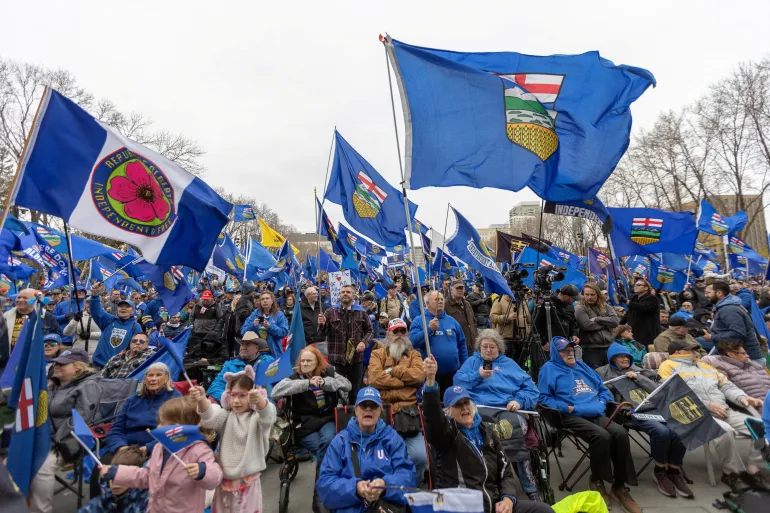
Could Alberta, one of Canada’s most important oil-producing regions, eventually become an independent country? That question has moved from political debate to the ballot box.
On October 19, voters in Alberta took part in a referendum that could open the door to a future vote on separating from Canada. But there is an important detail: Albertans were not voting directly for independence. They were deciding whether the provincial government should begin the legal process required to hold a separate, binding referendum on the issue.
The vote is non-binding, meaning it does not automatically change Alberta’s legal status. Even if voters support beginning the process, independence would involve further legal and constitutional steps.
The referendum has nevertheless become a major test of Canadian national unity. It has also exposed the growing frustration among some Albertans over how the federal government manages the country’s energy industry, immigration and distribution of public money.
Why does Alberta want to separate from Canada?
Alberta is home to around five million people and is one of Canada’s most important economic regions. It has vast oil and gas resources, and its economy depends heavily on the energy sector.
For years, many Albertans have argued that the federal government in Ottawa has placed too many restrictions on their oil and gas industry. They point to environmental rules and energy policies that they believe limit the province’s ability to develop its natural resources.
Another major complaint concerns money. Some separatist supporters argue that Alberta contributes more to the Canadian economy than it receives back through federal spending and transfers.
They also believe that provinces with larger populations, particularly Ontario and Quebec, have greater influence over national politics. In their view, Alberta’s interests are often overlooked when major federal decisions are made.
These complaints have helped the separatist movement gain attention. However, not everyone who is unhappy with Ottawa wants Alberta to leave Canada. Some voters simply want the federal government to give the province more control over its own affairs.
What exactly were people voting on?
The referendum included 10 separate questions. The first nine required voters to answer yes or no on proposed changes involving immigration and constitutional matters.
Some questions focused on giving Alberta greater control over immigration and limiting access to certain provincially funded services based on immigration status. Others dealt with the balance of power between provincial and federal governments.
The tenth question was the most politically sensitive. It asked voters to choose between keeping Alberta as a province of Canada and beginning the legal process for a future binding referendum on separation.
This distinction is important. A vote in favour of starting the process would not mean Alberta had already decided to become independent. It would be an initial step towards another referendum, followed by further legal and political challenges.
Why is Canada worried about the vote?
Alberta’s potential separation would be a major issue for Canada because the province plays an important role in the country’s economy, particularly through oil and gas production.
A serious move towards independence could create uncertainty over energy revenues, trade, public finances and the movement of goods and people across provincial borders.
It would also raise difficult questions about national debt, citizenship, the status of Indigenous treaty rights and the future of Alberta’s relationship with the rest of Canada.
Canadian Prime Minister Mark Carney has campaigned for national unity. Carney grew up in Alberta and has argued that the province’s future is stronger within a united Canada.
Premier Danielle Smith, who called the referendum after pressure from separatist supporters within her governing United Conservative Party, has also said she supports Alberta remaining in Canada. She has presented the wider referendum as a way to seek public backing for changes in the province’s relationship with Ottawa.
In other words, the vote is not simply a contest between Alberta and the federal government. It also reflects a debate within Alberta itself about whether the province should pursue greater autonomy or consider separation.
What do the polls suggest?
Opinion polls before the vote indicated that most Albertans preferred to remain part of Canada, while a smaller but politically significant group wanted the province to move towards a separation referendum.
That suggested the independence movement faced an uphill battle. But even a vote against beginning the legal process would not necessarily end the debate.
For separatist supporters, the campaign has already brought their concerns into the centre of provincial politics. They may continue to press for greater control over energy policy, public spending and immigration, even if the separation proposal does not win majority support.
The referendum therefore matters beyond the final numbers. It will also show how much public support exists for a more confrontational approach towards Ottawa.
Why were the results delayed?
Voting was disrupted at more than 100 polling stations that did not open on time, according to the report. Some locations extended their hours so people would still have an opportunity to vote.
More than 1.3 million Albertans had already cast ballots through advance voting and special ballots before polling day, indicating strong public interest in the referendum.
Election officials said the ballots would be counted by hand. The separation question was scheduled to be counted first because of the high level of public interest, followed by the other nine questions.
The counting process was expected to take longer because of the voting delays. Unofficial results were to be released as counting progressed, while official results would be confirmed later by Elections Alberta.
Can Alberta actually leave Canada?
Not simply because of this vote.
The current referendum only concerns whether to begin the legal process for a future binding referendum. Even if voters support that step, a later vote would not automatically make Alberta independent.
A move towards separation would involve difficult constitutional questions and negotiations with the Canadian government and other affected parties. Indigenous peoples’ rights and existing treaties would also have to be addressed.
Canada’s constitutional framework does not provide a simple, automatic route from a provincial vote to independence. Any attempt to separate would require a legally and politically complex process.
What happens next?
The immediate question is how Albertans voted on the proposal to begin the legal process. The wider question is whether the result will ease tensions with Ottawa or give the separatist movement fresh momentum.
If voters reject the proposal, the result could strengthen the position of those who want Alberta to remain in Canada. If they support it, the provincial government would face difficult decisions about the next legal steps and negotiations.
Either way, the debate is unlikely to disappear overnight. Alberta’s concerns over energy policy, federal power and its contribution to the national economy have been building for years.
For now, Canada is not breaking apart. But the referendum has made one thing clear: the relationship between Alberta and Ottawa has become a major political issue, and the outcome could shape that relationship for years to come.
Report a mistake
Related stories
20-Year-Old Co-Pilot’s Mayday Calls Before Fatal Florida Plane Crash Revealed

Israel Election Deadlock: Netanyahu Leads as Opposition Closes Gap

UAE Honours flydubai Crew for Courage During September In-Flight Incident
Reader comments (0)
No comments yet. Be the first.