Uttar Pradesh Tightens Government Job Verification Rules
Uttar Pradesh has tightened character verification rules for government recruitment. Involvement in violent activities aimed at changing the existing system could lead to disqualification, but political ideology or an FIR alone will not automatically make a candidate ineligible.

The Uttar Pradesh government has tightened character verification rules for candidates selected for government jobs, clarifying the circumstances under which applicants may be declared ineligible for appointment. Under the revised guidelines issued by M. Devaraj, Principal Secretary in the Appointment and Personnel Department, individuals involved in violent activities aimed at changing the existing system through force may be disqualified from government service.
However, the government has clarified that political ideology alone cannot be a reason to deny a candidate a government job. The mere registration of a First Information Report (FIR) or the pendency of an investigation will also not automatically make an applicant ineligible.
The revised guidelines follow directions from the Allahabad High Court and seek to establish clearer procedures for character verification. They also set a deadline of 30 days for the police to submit verification reports after receiving a request from the appointing authority.
Involvement in Violent Activities May Lead to Disqualification
Under the revised policy, candidates associated with organisations whose stated objectives include changing the existing system through violent means may be considered ineligible for government employment.
The guidelines also address participation in such activities during the three years preceding character verification, after the individual has attained the age of 21. Such involvement may be treated as an indication of continued participation, subject to the provisions of the policy and evidence of any subsequent change in conduct.
The rules distinguish between political beliefs and involvement in violent activities. A candidate cannot be disqualified merely for supporting a particular political ideology or holding views opposed to the government.
An FIR Alone Will Not Disqualify a Candidate
The government has made it clear that the registration of an FIR or a pending investigation will not, by itself, automatically disqualify an applicant from government employment.
Instead, the candidate's eligibility must be assessed under the applicable verification rules and the circumstances of the case.
This distinction is important because the registration of a criminal complaint does not, by itself, establish guilt. The revised framework seeks to ensure that the existence of a case is not treated as an automatic bar to appointment.
Police Must Submit Verification Reports Within 30 Days
The revised guidelines require district police and the Local Intelligence Unit (LIU) to submit character verification reports to the appointing authority within 30 days of receiving the request.
The Home Department will monitor delays in submitting these reports.
The guidelines also state that police and LIU personnel will not ordinarily be required to visit a candidate's residence for verification, and the candidate's physical presence will not be mandatory.
If a verification report is adverse, the district magistrate must give the candidate an opportunity to present their side, either online or in person, before forwarding a recommendation.
Appointment Letters May Be Issued Before Verification Is Complete
The revised policy also provides for provisional appointments where character verification is still pending. Authorities may issue a provisional appointment letter after obtaining the candidate's self-declaration and the prescribed documents.
However, if subsequent verification establishes that the candidate is ineligible or has provided false information, the appointment may be cancelled and further legal action may follow.
The guidelines also clarify that government employees already in service will not ordinarily be required to undergo fresh character verification under the new policy. The appointing authority may, however, seek relevant information from their previous departments.
What the New Rules Mean for Job Applicants
The revised framework places greater emphasis on timely verification and the assessment of information relevant to a candidate's eligibility.
For applicants, the key points are that political ideology alone is not a ground for disqualification, an FIR or pending investigation does not automatically bar appointment, and participation in specified violent activities may affect eligibility under the rules.
The 30-day reporting deadline is intended to make the verification process more time-bound. Where an adverse report is received, candidates must be given an opportunity to present their case before a recommendation is forwarded.
The final decision on an applicant's eligibility will depend on the applicable provisions and the facts established during verification.
Report a mistake
Related stories
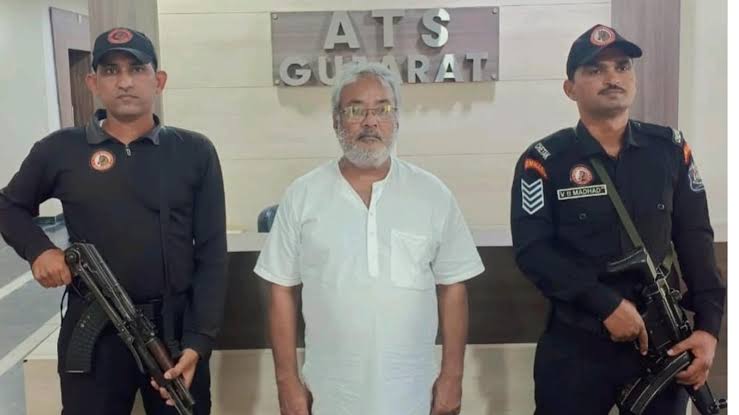
Gujarat ATS Takes Salim Ismail Dola into Custody in ₹438-Crore Vadodara Drug Case

BMC Should Repost Dia Mirza’s Pollution-Free Diwali Video: Deputy Mayor Sanjay Ghadi

Gujarat CM Bhupendra Patel Inaugurates ₹48.22-Crore Modern Hospital in Vapi

Reader comments (0)
No comments yet. Be the first.