RTI Reveals Letters on Election Official Were Sent to CEC Gyanesh Kumar
An RTI reply shows that letters from Election Commissioners Sukhbir Sandhu and Vivek Joshi about alleged misconduct by senior official Maneesh Garg were forwarded to Chief Election Commissioner Gyanesh Kumar and the DoPT.

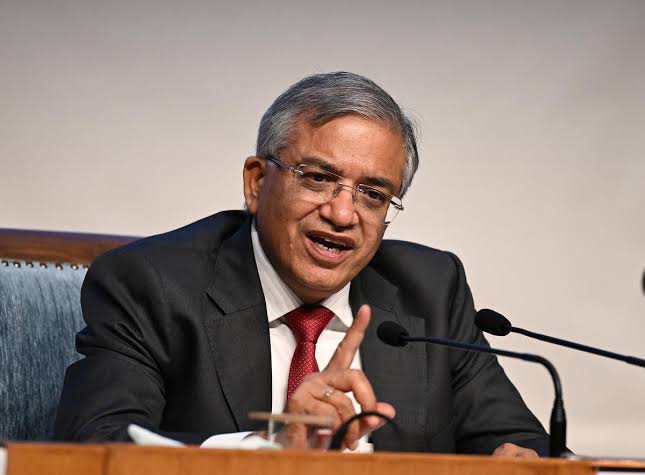
Letters written by two Election Commissioners raising concerns about the alleged conduct of a senior official were forwarded to Chief Election Commissioner Gyanesh Kumar, as well as the Department of Personnel and Training (DoPT), according to documents obtained under the Right to Information (RTI) Act.
The letters were written by Election Commissioners Sukhbir Sandhu and Vivek Joshi and concerned Maneesh Garg, a senior deputy election commissioner. The matter came to light through an RTI application filed by transparency activist Commodore Lokesh Batra (Retd.).
The documents show that the Cabinet Secretariat acknowledged the letters and recorded its handling of the matter in early August. However, the reply does not show that a formal investigation was ordered or that the allegations against Garg were established.
The issue is important because it concerns the working relationship between senior officials of the Election Commission of India (ECI), a constitutional body responsible for conducting elections in the country.
Here is what the documents reveal, what the dispute is about, and why it matters.
1. What did the RTI documents reveal?
According to the information released under the RTI Act, both commissioners wrote to Cabinet Secretary TV Somanathan on July 29.
The Cabinet Secretariat subsequently forwarded the letters to the office of Chief Election Commissioner Gyanesh Kumar and to the Department of Personnel and Training.
An internal note dated August 3 proposed seeking the CEC's opinion on the letters. Another note, dated August 4, recorded that the letters had been written by the commissioners in their individual capacities rather than as formal communications from the Election Commission itself.
The secretariat also noted the risk that action concerning the matter could be seen as interference in a constitutional body. It recommended keeping the issue on record with the DoPT for any future decisions concerning the officer.
The response to the two commissioners was an acknowledgement confirming receipt of their letters. The acknowledgements, dated August 5, were copied to officials in the DoPT and the CEC's office.
In simple terms, the documents show that the letters were received, forwarded and recorded. They do not establish that the Cabinet Secretariat accepted the allegations or took disciplinary action against Garg.
2. What were the commissioners concerned about?
The dispute reportedly centred on changes to the way files from the Election Commission's Information Technology (IT) department were routed.
According to an earlier Hindustan Times report, the commissioners raised concerns about a work-allocation order issued by Garg on July 28.
The order dealt with the responsibilities of officials in the Election Commission, including Director General (IT) Seema Khanna and Deputy Election Commissioner Sanjay Kumar.
The commissioners reportedly objected to changes involving the routing of IT department files that had previously gone through Kumar.
Their letters stated that Garg had received additional responsibility for the Administration Division while another deputy election commissioner, Bhanu Prakash Yeturu, was on leave until August 9.
They also alleged that the work-allocation order was issued without consulting the commissioners.
Joshi reportedly raised a further concern, saying that a file he had requested from the Administration Division was not provided to him.
These are allegations and concerns recorded in the letters. The information supplied does not establish whether the decisions were improper or whether any rules were ultimately violated.
3. Why did the letters refer to the 2023 CEC/EC Act?
The commissioners reportedly referred to Sections 18(1) and 18(2) of the Chief Election Commissioner and Other Election Commissioners (Appointment, Conditions of Service and Term of Office) Act, 2023.
The reference matters because the dispute concerns the responsibilities and working arrangements of officials within a constitutional institution.
The commissioners appeared to be questioning the process followed in allocating work and handling official files.
However, citing provisions of a law does not, by itself, prove that the law was violated. Establishing that would require examining the relevant provisions, the work-allocation order, the authority under which it was issued and the full circumstances surrounding the decisions.
The available RTI response mainly records how the letters were handled by the Cabinet Secretariat. It does not provide a final legal finding on the commissioners' concerns.
4. Why was the Chief Election Commissioner sent a copy?
This is one of the important details revealed by the RTI reply.
An earlier Hindustan Times report on October 3 said the Cabinet Secretary had not acted on the letters because they were written by the commissioners in their individual capacities rather than as formal communications from the Election Commission.
The RTI documents add that copies were also forwarded to the office of Chief Election Commissioner Gyanesh Kumar.
That distinction matters because the letters concerned the conduct and working arrangements of officials within the Election Commission itself.
Forwarding the correspondence to the CEC meant that the head of the institution was also made aware of the matter, according to the records.
However, the documents do not establish what action, if any, the CEC subsequently took in response to the letters.
5. How does the dispute connect to the Election Commission's IT system?
The controversy has also drawn attention because of concerns about changes to the Election Commission's IT systems and access to electoral roll data.
An investigation by The Indian Express, as described in the supplied report, raised questions about a new IT protocol introduced under Seema Khanna's supervision and approved by the Election Commission.
The investigation reported that the system restricted access to the electoral roll database for officials responsible for adding or deleting voters' names, including Electoral Registration Officers (EROs).
Electoral rolls are the official lists of eligible voters. EROs play an important role in maintaining these lists by processing applications for registration, corrections and deletions.
If officials responsible for these tasks cannot access the information they need, questions can arise about how efficiently and transparently electoral roll changes are handled.
However, the concerns about IT access and the allegations regarding Garg's work-allocation order are separate issues. The available information does not establish that the two matters were part of a single coordinated action.
The Election Commission has also denied reports of internal disagreements, saying that its decisions were either unanimous or taken by a majority in accordance with the rules.
6. What does this mean for the Election Commission?
The Election Commission plays a central role in Indian democracy. It oversees elections and is responsible for ensuring that electoral processes are conducted according to the law.
For that reason, questions about internal decision-making, the allocation of responsibilities and access to electoral data deserve careful examination.
At the same time, allegations involving senior officials need to be assessed on the basis of documents, applicable rules and any formal findings—not simply on the fact that a complaint or letter was written.
The RTI response is useful because it provides a clearer record of how the Cabinet Secretariat handled the commissioners' correspondence. It does not, however, settle the underlying dispute.
Further information about any subsequent inquiry, decision or disciplinary process would be needed to establish whether the allegations led to formal action.
The bottom line
The RTI documents reveal that letters from Election Commissioners Sukhbir Sandhu and Vivek Joshi concerning alleged misconduct by senior deputy election commissioner Maneesh Garg were forwarded to Chief Election Commissioner Gyanesh Kumar and the DoPT.
The records also show that the Cabinet Secretariat considered the constitutional sensitivity of the matter and recommended keeping it on record.
But an important distinction remains: the forwarding of a complaint is not the same as proving the allegations it contains.
The documents clarify how the correspondence was handled. They do not establish that Garg committed misconduct, nor do they confirm what action was ultimately taken by the Election Commission.
Report a mistake
Related stories
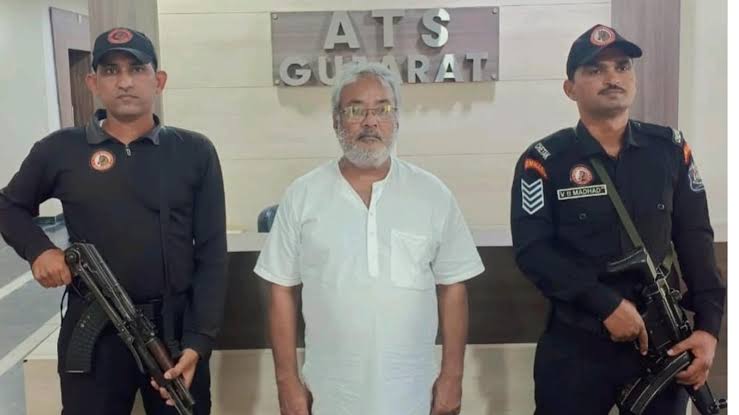
Gujarat ATS Takes Salim Ismail Dola into Custody in ₹438-Crore Vadodara Drug Case
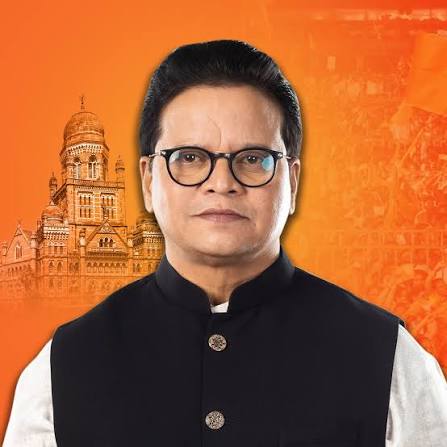
BMC Should Repost Dia Mirza’s Pollution-Free Diwali Video: Deputy Mayor Sanjay Ghadi

Gujarat CM Bhupendra Patel Inaugurates ₹48.22-Crore Modern Hospital in Vapi

Reader comments (0)
No comments yet. Be the first.