US Discusses Venezuelan Oil with Reliance as Rubio Calls India a ‘Refining Superpower’
US Secretary of State Marco Rubio says Washington is discussing plans with Reliance Industries to refine more Venezuelan oil, as India looks to diversify its crude imports and strengthen its energy security.

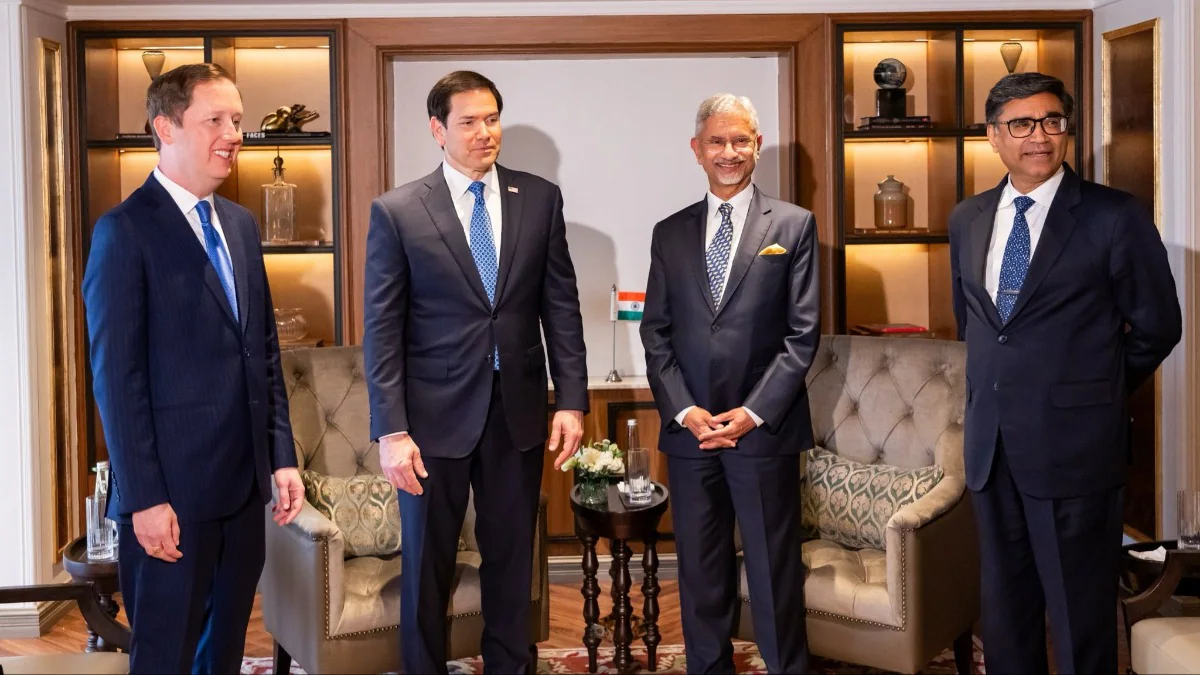
The United States wants India to play a bigger role in bringing Venezuelan oil to the global market. And it sees Reliance Industries, led by Mukesh Ambani, as a company that could help make this happen.
US Secretary of State Marco Rubio said on Tuesday that Washington was discussing the possibility of Reliance refining more crude oil from Venezuela. He praised India’s oil-processing capabilities, calling the country a “refining superpower”.
Rubio is visiting India and is scheduled to tour Reliance Industries’ major refinery complex in Jamnagar, Gujarat, on Wednesday. His visit comes at a time when India is trying to maintain a steady supply of oil while managing its energy relationships with Russia, the United States and other oil-producing countries.
But what does this proposal actually mean, and why is Washington interested in India’s refineries?
Why does the US want Reliance to refine Venezuelan oil?
Venezuela has some of the world’s largest oil reserves, but producing and exporting its crude has been affected by years of economic problems, infrastructure challenges and US sanctions.
Much of Venezuela’s oil is heavy crude. This type of oil is thick and requires specialised equipment and processing to turn it into useful products such as petrol, diesel and other fuels.
Not every refinery can process it efficiently. Reliance’s Jamnagar complex, one of the world’s largest refining facilities at a single location, has the technology and experience needed to handle different types of crude, including heavy oil.
Rubio said Reliance had processed Venezuelan oil in the past and could potentially handle more as supplies increase.
For the United States, working with an experienced Indian refiner could help bring more Venezuelan crude into the market. For Reliance, it could create another opportunity to source oil and use its refining capacity.
However, these discussions do not mean a new supply agreement has already been finalised. Sanctions, licensing requirements and other commercial conditions may still need to be addressed.
What did Rubio say about India’s oil imports?
Rubio also spoke about India’s decision to diversify its sources of crude oil.
India imports a large share of the oil it consumes. This makes the country vulnerable to changes in international prices, shipping disruptions and political tensions between oil-producing nations.
Russia became an important supplier of crude to India after Western countries imposed sanctions on Moscow following its invasion of Ukraine. The availability of Russian oil at competitive prices made it attractive to Indian refiners.
Washington, however, has repeatedly raised concerns about countries buying Russian oil, arguing that energy revenues help Moscow sustain its war in Ukraine.
Rubio acknowledged that India had been looking to diversify its energy supplies and described that approach as sensible. He also said the United States wanted to become a source of energy for India.
His message was that the issue was not only about Russian oil. Washington wants India to have a wider choice of suppliers, with Venezuela among the potential options.
Does this mean India will stop buying Russian oil?
No. Rubio’s comments do not amount to an announcement that India will stop importing Russian crude.
Diversifying supplies means buying oil from more countries rather than depending too heavily on one source. India can continue to assess Russian crude alongside supplies from the Middle East, the Americas and other producers, depending on prices, availability, shipping costs and government policy.
Changing suppliers also takes time. Refineries are designed to process particular grades of crude, and companies must consider whether a different type of oil can be processed efficiently and profitably.
For India, the priority is to secure enough energy at reasonable prices. Any decision to increase purchases from Venezuela would depend on whether the oil is commercially attractive and can be supplied under the applicable rules.
What role could Reliance play in Venezuela itself?
The discussions may go beyond refining oil in India.
Rubio has also pointed to existing oil interests and concessions held by Indian companies in Venezuela. These could offer opportunities to increase production, although any expansion would depend on the relevant agreements, operating conditions and regulatory approvals.
This is important because refining oil and producing it are two different activities. Refining means processing crude into usable fuels and other petroleum products. Production means extracting oil from the ground.
If Indian companies were able to increase production in Venezuela and process more of that oil at Indian refineries, it could create a broader energy partnership. But this remains a possibility under discussion, not a confirmed expansion of operations.
Why does Rubio’s visit to Jamnagar matter?
Rubio’s planned visit to Reliance’s Jamnagar refinery shows that energy cooperation is an important part of his India trip.
Jamnagar is a major centre of India’s refining industry, and Reliance’s facilities play a significant role in processing crude oil for domestic use and international markets.
Rubio is also meeting Indian business leaders and holding discussions with government officials. The talks come as India and the United States continue negotiations on a bilateral trade agreement and work through differences over tariffs, energy purchases and wider strategic issues.
The proposed Venezuelan oil cooperation could give both sides a practical area in which their interests overlap: the US wants more routes for Venezuelan crude to reach the market, while India wants reliable supplies and greater flexibility in choosing where it buys oil.
Could this affect petrol and diesel prices in India?
Not immediately, and not necessarily.
Bringing more oil into the international market can help improve supply, but the effect on petrol and diesel prices depends on several factors. These include global crude prices, the rupee-dollar exchange rate, transport and insurance costs, refining expenses, taxes and decisions made by fuel companies.
Even if Reliance processes more Venezuelan crude, that alone would not guarantee lower fuel prices for Indian consumers.
The larger benefit would be the possibility of having more sources of oil available. A wider range of suppliers can give refiners greater flexibility when one source becomes expensive or difficult to access.
The bigger picture
Rubio’s remarks show how energy has become an important part of the relationship between India and the United States.
Washington wants to expand its energy ties with India and encourage a broader mix of oil suppliers. India, meanwhile, needs to protect its energy security and avoid becoming too dependent on any single country.
Reliance’s refining expertise could help connect these interests, particularly if Venezuelan oil production grows and the necessary sanctions and commercial arrangements are put in place.
For now, the discussions are still at an early stage. The real test will be whether they lead to practical agreements that make commercial sense for Reliance and help India secure reliable supplies without increasing costs.
Report a mistake
Related stories

Gujarat ATS Takes Salim Ismail Dola into Custody in ₹438-Crore Vadodara Drug Case

BMC Should Repost Dia Mirza’s Pollution-Free Diwali Video: Deputy Mayor Sanjay Ghadi
Gujarat CM Bhupendra Patel Inaugurates ₹48.22-Crore Modern Hospital in Vapi

Reader comments (0)
No comments yet. Be the first.