Kashmir Waqf Board Sermon Row: Omar Abdullah, Mehbooba Mufti Oppose Uniform Friday Khutbah Plan
A Jammu and Kashmir Waqf Board proposal for common themes in Friday sermons has triggered protests from political leaders and Muslim clerics. Chairperson Darakhshan Andrabi says no order making the sermons mandatory has been issued.

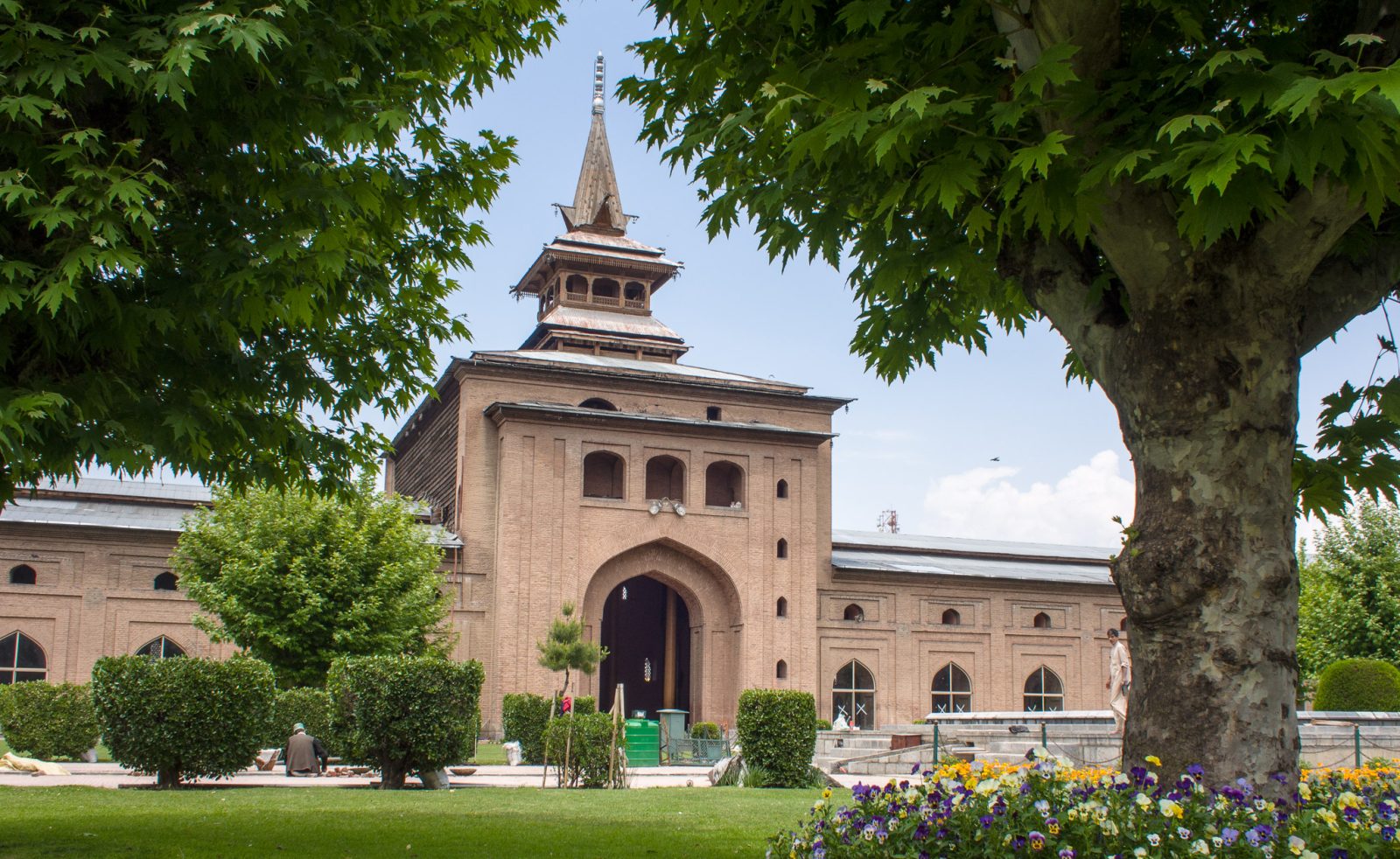
A proposal by the Jammu and Kashmir Waqf Board to introduce common themes for Friday sermons at affiliated mosques and shrines has sparked a major controversy in the Kashmir Valley, drawing objections from Chief Minister Omar Abdullah, Peoples Democratic Party (PDP) president Mehbooba Mufti and prominent Muslim religious leaders.
The dispute centres on who should decide the subjects discussed during the Friday khutbah — the sermon delivered as part of congregational prayers. Critics argue that prescribing common themes through a government-linked institution could undermine the independence of religious scholars and interfere in Muslim religious affairs.
The Waqf Board, chaired by senior BJP leader Dr Syed Darakhshan Andrabi, has defended the initiative as an effort to improve coordination among religious scholars and encourage discussions on social problems. However, Andrabi subsequently clarified that the board had not issued an order making uniform sermons compulsory.
What did the Waqf Board propose? The controversy emerged after a meeting of religious scholars, imams, muftis and khateebs convened by the Waqf Board. According to The New Indian Express, the board proposed forming a core committee of religious scholars to identify common themes for Friday sermons and other religious occasions at institutions under its administration.
The proposed themes were reported to include:
- Religious awareness and moral values - Social harmony and unity - Drug addiction and other social problems - Issues affecting young people and families - Matters of public interest consistent with Islamic teachings
The board's stated rationale was to encourage constructive religious guidance and coordinate efforts to address social challenges. However, the announcement triggered concern over whether common themes could eventually become compulsory instructions for imams.
The distinction is important: the reported proposal concerned shared sermon themes, while the board chairperson subsequently denied issuing a mandatory order.
Omar Abdullah calls the proposal unacceptable
Jammu and Kashmir Chief Minister Omar Abdullah strongly criticised the initiative, describing it as an unacceptable attempt by the BJP to interfere in Muslim religious affairs.
Abdullah called on the Waqf Board chairperson to stop the initiative, arguing that religious institutions should not have their sermons dictated by political authorities.
His objection reflects a wider concern among opposition leaders that administrative control over religious institutions could extend into the content of religious teachings.
The controversy has also added to political tensions between the National Conference-led government in Jammu and Kashmir and the BJP, particularly over questions of religious autonomy and the role of institutions operating under statutory oversight.
Mehbooba Mufti questions who will decide what imams preach
PDP president and former chief minister Mehbooba Mufti also opposed the proposal. She questioned the authority of the board to determine what religious leaders should discuss during Friday prayers.
Mufti argued that Jammu and Kashmir should not become a testing ground for measures that could interfere with Muslim religious practices elsewhere in the country.
Her criticism centres on the principle that religious guidance should remain the responsibility of qualified scholars and local religious institutions rather than being shaped by political considerations.
Mirwaiz Umar Farooq and religious organisations raise objections
Mirwaiz Umar Farooq, a prominent religious leader in Kashmir and head of the Muttahida Majlis-e-Ulema (MMU), also opposed the proposed arrangement.
The MMU argued that the mosque pulpit is a religious trust and that the responsibility for interpreting Islamic teachings and delivering sermons belongs to imams, ulema and recognised religious institutions.
Religious leaders have also stressed that Friday sermons often address local concerns, community problems and religious questions that may differ from one place to another. They fear that a centrally coordinated framework could limit the ability of individual scholars to address those concerns independently.
Darakhshan Andrabi says no compulsory order was issued
Facing mounting criticism, Waqf Board chairperson Darakhshan Andrabi clarified on October 13 that no order had been issued requiring mosques to deliver identical Friday sermons.
Andrabi maintained that the initiative emerged from discussions among religious scholars and was intended to encourage cooperation in addressing social issues. She said imams and preachers remained free to decide what subjects to cover in their sermons.
Her clarification is central to understanding the current status of the dispute. While reports described a proposal to develop common themes, the board's chairperson denied that a mandatory directive had been issued.
The available reporting therefore establishes a controversy over the proposed framework, but does not establish that a compulsory, uniform sermon had already been implemented across the Valley.
Could the proposal affect Srinagar's historic Jamia Masjid?
The question of which religious institutions would fall within the proposal's scope has also attracted attention.
The Waqf Board administers several prominent religious institutions, including the Hazratbal shrine. Srinagar's historic Jamia Masjid, however, is outside the board's direct administrative control, according to the supplied report.
This distinction matters because the board's authority over institutions under its management is not automatically equivalent to authority over every mosque in Jammu and Kashmir. The proposal's precise reach beyond board-managed institutions remains an important point to clarify.
What happens next?
The controversy highlights a difficult balance between the administration of religious endowments and the independence of religious practice. The Waqf Board has presented the proposal as a way to promote social awareness, while critics fear that common sermon themes could become a mechanism for political or administrative influence.
The immediate question is whether the board will pursue a voluntary framework developed by religious scholars or abandon the proposal following the backlash.
For now, the chairperson's clarification that no mandatory order has been issued is an important qualification. Any claim that the board has imposed uniform sermons across Kashmir's mosques would go beyond what the currently reported facts establish.
Report a mistake
Related stories
Gujarat ATS Takes Salim Ismail Dola into Custody in ₹438-Crore Vadodara Drug Case
BMC Should Repost Dia Mirza’s Pollution-Free Diwali Video: Deputy Mayor Sanjay Ghadi
Gujarat CM Bhupendra Patel Inaugurates ₹48.22-Crore Modern Hospital in Vapi

Reader comments (0)
No comments yet. Be the first.