Hyderabad College Dandiya Event Turns Tragic as Lighting Arch Collapses, Engineering Student Dies
An 18-year-old engineering student died and at least 14 people were injured after a lighting structure collapsed during a Dandiya event at MVSR Engineering College in Nadergul, Hyderabad, on Saturday.

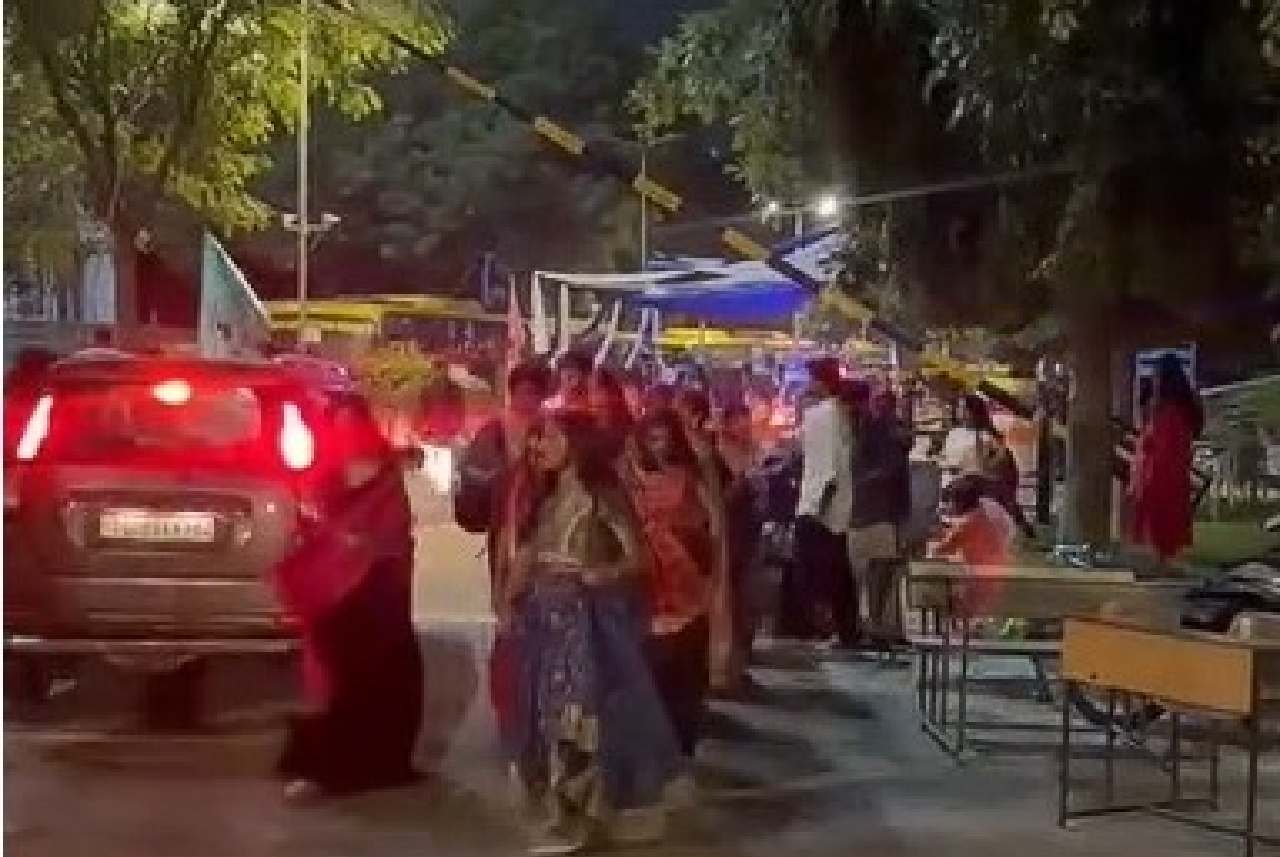
A festive Dandiya celebration at MVSR Engineering College in Nadergul, on the outskirts of Hyderabad, turned tragic on Saturday, October 17, after a large metal structure fitted with lights collapsed on students.
The accident killed Sona Narayan Das, a first-year student of Electrical and Electronics Engineering (EEE). She was taken to a nearby private hospital but died while receiving treatment.
Her sister, Meena Narayan Das, was also injured and was being treated at Pratyusha Hospital near Nadergul. Police later said that the injured people were out of danger, although early reports had raised concerns about some of their conditions.
Reports differed on the total number of injured people. India Today reported 14, while The Indian Express reported 15. The final number should be confirmed by the authorities.
Why did the lighting structure collapse?
According to police, wind caused the metal frame carrying the lights to fall. The structure came down while students were gathered for the celebration.
The Indian Express reported that more than 600 students were present at the venue when the accident happened at around 7:30 pm.
However, the role of wind does not, by itself, explain whether the structure was properly designed, installed and secured. A formal investigation would need to establish why the frame fell and whether the required safety precautions were followed.
Temporary structures used at college festivals and public events can include metal frames, lighting rigs, decorative arches, stages and banners. These structures must be able to withstand the conditions they may face, including wind and the weight of the equipment attached to them.
Their stability can depend on several factors, including the quality of the materials, the way the frame is assembled, the strength of its supports and the methods used to anchor it to the ground.
If a structure is poorly secured or has not been checked properly, strong winds can increase the risk of it falling. The exact cause of the collapse at MVSR Engineering College, however, must be established through an investigation rather than assumption.
Questions about event safety
The incident has raised important questions about safety arrangements at large college events.
A college festival may appear to be an internal campus programme, but hundreds of students gathering in one place can create risks similar to those at other large events. Organisers must consider not only the entertainment programme but also the safety of the people attending it.
Important precautions include: Checking the structure: Qualified personnel should check temporary stages, arches and lighting frames before people are allowed near them.
Securing equipment: Heavy frames and lighting systems need suitable supports and anchoring, with safety arrangements appropriate to their design and expected wind conditions.
Keeping people at a safe distance: Crowds should not be allowed to gather beneath or too close to structures that could fall.
Preparing for emergencies: Organisers should have clear evacuation arrangements, first-aid support, access for ambulances and a plan for contacting emergency services.
Coordinating with authorities: Depending on the event and applicable local requirements, organisers may need to inform the police and obtain relevant permissions or clearances.
These are general safety principles, not findings that MVSR College necessarily violated any particular requirement. Whether there was negligence or a breach of rules in this case remains a matter for the authorities to establish.
Did the college inform the police?
The Indian Express reported that police questioned whether the authorities had been informed about the large gathering.
Shamshabad Deputy Commissioner of Police B. Rajesh told the newspaper that the organisers should at least have informed the police about the large crowd. The report also noted that the event was held within the college campus.
This raises an important distinction: holding an event inside a college does not automatically remove the need to consider crowd management and emergency preparedness. At the same time, the precise permissions or notifications required depend on the applicable rules and circumstances.
The available reporting does not establish that a failure to inform the police caused the structure to collapse. That question is separate from whether the lighting frame was safe.
What did Telangana Chief Minister Revanth Reddy say?
Telangana Chief Minister A. Revanth Reddy expressed grief over Sona Narayan Das's death and conveyed his condolences to her family.
According to the government release cited by India Today, he directed officials to ensure advanced medical treatment for those injured and to identify those responsible for the accident. He also called for strict action against those found responsible.
The directions signal that accountability is expected to be examined. However, the announcement of possible action does not mean that any individual or institution has already been found guilty of negligence.
Who could be held responsible?
The investigation will need to establish how the structure was designed, installed and maintained, who was responsible for checking it, and whether relevant safety requirements were followed.
Depending on the evidence, the authorities may examine the roles of the event organisers, the college administration, the contractor or vendor responsible for the lighting structure, and any other parties involved.
A collapse during strong winds does not automatically prove negligence. Investigators would need to determine whether the structure was reasonably safe for the conditions and whether anyone failed to take precautions that were required or reasonably expected.
If evidence establishes a violation of applicable law or negligence, the responsible parties could face legal or other action under the relevant provisions. The precise consequences will depend on the investigation and the evidence.
Why this tragedy matters beyond one college
College festivals are important occasions for students to socialise, celebrate and participate in cultural activities. But the excitement of an event must not take priority over basic safety.
A lighting frame or decorative arch may look like a temporary part of the celebration, yet it can be heavy enough to cause fatal injuries if it falls on people. Safety checks are therefore not merely paperwork; they can help prevent avoidable injuries and deaths.
The Hyderabad accident is a reminder that event safety must be planned before the crowd arrives. Structures need to be checked, risks from weather must be considered, and emergency arrangements must be ready.
For Sona's family, the celebration has ended in an irreversible loss. The investigation must now establish how the accident happened, whether safety precautions were adequate and whether anyone should be held accountable.
The key questions remain: Why did the lighting frame fall, were appropriate safety checks carried out, and could the tragedy have been prevented?
Report a mistake
Related stories
Gujarat ATS Takes Salim Ismail Dola into Custody in ₹438-Crore Vadodara Drug Case
BMC Should Repost Dia Mirza’s Pollution-Free Diwali Video: Deputy Mayor Sanjay Ghadi
Gujarat CM Bhupendra Patel Inaugurates ₹48.22-Crore Modern Hospital in Vapi
Reader comments (0)
No comments yet. Be the first.