Yes Bank Shares Crash 14.43% After Supreme Court Upholds ₹8,415 Crore AT-1 Bond Ruling
The Supreme Court upheld a ruling that invalidated Yes Bank’s ₹8,415 crore AT-1 bond write-off from 2020. The bank’s shares fell sharply as investors assessed the possible financial impact.

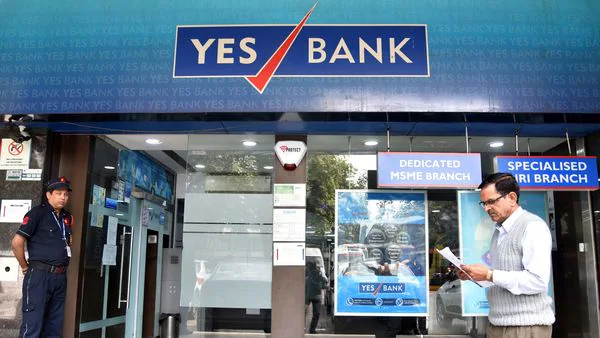
Yes Bank suffered a major setback on Thursday, October 15, after the Supreme Court upheld the Bombay High Court’s decision to cancel the write-off of the bank’s Additional Tier-1 (AT-1) bonds worth ₹8,415 crore. The ruling concerns bonds that were written off during the bank’s reconstruction in March 2020.
The market reacted sharply to the judgment. Yes Bank shares fell as much as 20% during the trading session on the Bombay Stock Exchange (BSE), touching ₹16.98 — a new 52-week low. The stock later recovered some losses and closed at ₹18.15, down 14.43% from the previous close of ₹21.21.
The ruling has raised questions about the bank’s financial position because the bonds had previously been removed from its liabilities as part of its rescue plan. The bank is examining the implications of the judgment.
What Did the Supreme Court Say? A bench of Justices Dipankar Datta and Augustine George Masih dismissed appeals filed by Yes Bank, the Reserve Bank of India (RBI) and the Central government against the Bombay High Court’s January 2023 judgment.
The Supreme Court said it saw no reason to interfere with the High Court’s decision. The ruling means the High Court’s order cancelling the ₹8,415 crore bond write-off remains in force.
The central legal question was whether the bank’s administrator had the authority to write off the bonds after the reconstruction scheme had come into effect, and whether the action followed the applicable rules and the terms of the bonds.
The Bombay High Court had ruled in favour of the bondholders. The Supreme Court’s decision preserves that relief, dealing a significant setback to Yes Bank and the authorities that had defended the write-off.
What Are AT-1 Bonds?
AT-1 stands for Additional Tier-1 capital. These are financial instruments that banks issue to raise capital and strengthen their ability to absorb losses during periods of financial stress.
Unlike ordinary fixed deposits, AT-1 bonds carry special risks. Their terms can allow them to be written off or converted into shares when a bank faces severe financial difficulties or meets specified conditions.
Banks may offer relatively attractive interest rates to investors because these bonds carry higher risks. Investors can, however, lose some or all of their money under the conditions set out in the bond documents and applicable regulations.
AT-1 bonds became a major topic of international debate after the controversial write-off of such bonds issued by Credit Suisse during its rescue in 2023.
Why Were Yes Bank’s Bonds Written Off in 2020?
Yes Bank faced a serious financial crisis in early 2020, raising concerns about its ability to continue operating normally. The RBI stepped in and introduced a reconstruction scheme to stabilise the bank and protect the wider financial system.
As part of the March 2020 restructuring, AT-1 bonds worth ₹8,415 crore were written off. This meant investors holding those bonds lost their investment under the decision.
Bondholders challenged the move in court. They argued that the bank’s administrator did not have the legal authority to cancel the bonds in the manner adopted and that the action did not follow the applicable reconstruction scheme and legal requirements.
The Bombay High Court accepted the challenge in January 2023 and cancelled the write-off. Yes Bank, the RBI and the Central government then appealed to the Supreme Court, which has now upheld the High Court’s ruling.
What Were the Arguments From Both Sides?
The Centre, the RBI and Yes Bank argued that writing off the bonds was necessary to rebuild the bank’s capital and help it recover from the 2020 crisis. Their position was that AT-1 bonds are designed to absorb losses when a bank comes under severe financial pressure.
The bondholders, represented in part by Axis Trustee Services and others, argued that the bank’s administrator had acted beyond his legal powers. They said the write-off was not authorised under the reconstruction scheme and did not comply with the applicable legal process.
The Supreme Court’s decision leaves the bondholders’ legal victory intact. The judgment also raises broader questions about how banks can use AT-1 bonds during a financial rescue and what protections investors have when such decisions are challenged.
How Could the Verdict Affect Yes Bank?
The immediate concern is the possible financial impact of restoring the bonds and dealing with interest obligations. The ₹8,415 crore amount is substantial and could affect the bank’s reported liabilities, capital position and future financial planning.
However, the precise accounting treatment and final financial consequences will depend on how the judgment is implemented and the bank’s subsequent disclosures. The ruling should not automatically be interpreted as meaning that the entire amount will be paid out immediately in cash.
Yes Bank said it was examining the Supreme Court’s judgment and its implications. Investors will be watching for further clarification from the bank about the next steps.
What Does the Share Price Fall Mean for Investors?
The steep fall in Yes Bank shares reflects market concerns about the possible cost of the ruling and its effect on the bank’s financial strength.
A falling share price does not, by itself, establish that a company is insolvent or unable to meet its obligations. It indicates that investors are reassessing the risks and possible future earnings of the business.
Investors should distinguish between the legal outcome, the bank’s actual financial impact and the market’s immediate reaction. Anyone considering buying or selling the stock should review the bank’s official disclosures, capital position and future updates rather than relying only on a single day’s share-price movement.
The case is also an important reminder that higher returns often come with higher risks. Before investing in complex financial products such as AT-1 bonds, investors should understand the conditions under which their money could be lost.
Report a mistake
Related stories

BMC Should Repost Dia Mirza’s Pollution-Free Diwali Video: Deputy Mayor Sanjay Ghadi

Jio Platforms IPO: Mukesh Ambani’s Digital Giant Attracts $77 Billion in Bids

Odisha CM Mohan Charan Majhi to Attend India Chem 2026 in Mumbai

Reader comments (0)
No comments yet. Be the first.